

In the rapidly expanding world of cloud computing, Microsoft Azure has solidified its position as a critical platform for businesses of all sizes. As organizations migrate their operations and build new applications in the cloud, the demand for certified professionals who can manage and develop on Azure is skyrocketing. For those looking to validate their skills and advance their careers, two of the most popular and pivotal certifications are the AZ-104: Microsoft Azure Administrator and the AZ-204: Developing Solutions for Microsoft Azure.
But these certifications pave two very distinct career paths. One is for the architects and custodians of the cloud environment; the other is for the creators and builders of the applications that run within it. Choosing the right one is a crucial decision that can define your professional trajectory. This guide will provide an exhaustive comparison to give you the clarity needed to choose the path that best aligns with your skills and ambitions.
At a Glance: Administrator vs Developer (AZ-104 vs AZ-204)
Before we dive deep, this table provides a quick reference for the key characteristics of each exam.
| Feature | AZ-104: Microsoft Azure Administrator | AZ-204: Developing Solutions for Microsoft Azure |
|---|---|---|
| Your Role | You manage the “house” (the cloud infrastructure). | You build things inside the “house” (the applications). |
| Core Focus | Infrastructure, Networking, Security, Monitoring. | Coding, APIs, Databases, Application Deployment. |
| Ideal For | IT Admins, System Engineers, Network Pros. | Software Developers, DevOps Engineers. |
| Coding Needed? | No, but PowerShell/CLI scripting is key. | Yes, proficiency in C#, Python, or JS is a must. |
| Prerequisites | Recommended: 6+ months of hands-on Azure experience. | Recommended: 1-2 years of professional development experience. |
| Exam Cost | ~$165 USD (varies by region) | ~$165 USD (varies by region) |
| Renewal | Free, annually via online assessment. | Free, annually via online assessment. |
Deep Dive: The AZ-104 Azure Administrator Path

The AZ-104 certification is the cornerstone for any professional aiming to build a career in cloud infrastructure management. An Azure Administrator is the person who keeps the lights on. They are responsible for the health, security, and scalability of the cloud environment that applications and services run on. This role is perfect for you if you come from an IT operations background and enjoy managing systems more than writing application code. For a deeper look, consider the differences between an Azure Administrator vs. an AWS Solutions Architect.
What You’ll Master with AZ-104
The AZ-104 exam is a practical test of your ability to perform day to day administrative tasks, broken down into five key domains.
1. Manage Azure Identity and Governance (20-25%)
This is the security foundation of any Azure environment. It’s about building a secure and compliant identity architecture. You’ll need to master Azure Active Directory (now Microsoft Entra ID), understanding how to manage users, groups, and tenants. A critical skill tested is implementing Role Based Access Control (RBAC) to enforce the principle of least privilege. You’ll also be tested on Azure Policy, a service for creating and enforcing rules across your resources to maintain governance.
- Real world task: Your company must ensure that no one can create expensive, high performance VMs in a development subscription. You would create an Azure Policy that denies the creation of specific VM SKUs and apply it to that subscription.
2. Implement and Manage Storage (15-20%)
This domain covers the backbone of data persistence in Azure. You must be proficient with the different storage solutions, including Azure Blob Storage for unstructured data, Azure Files for shared file systems, and managing the disks attached to your virtual machines. You’ll need to know how to create storage accounts, manage data access tiers (Hot, Cool, Archive) to optimize costs, and configure critical data redundancy options.
- Real world task: You need to set up a file share for a team that is accessible from both on premises Windows machines and Azure VMs. You would deploy an Azure Files share and configure access accordingly.
3. Deploy and Manage Azure Compute Resources (20-25%)
This is the heart of Infrastructure-as-a-Service (IaaS). You will be tested heavily on deploying, managing, and scaling Azure Virtual Machines (VMs). This includes selecting the correct VM size, configuring networking and storage, and ensuring high availability. A key topic is implementing scalability using Virtual Machine Scale Sets (VMSS).
- Real world task: An e-commerce site expects a massive traffic spike for a holiday sale. You must configure a VMSS to automatically deploy new VM instances when CPU usage exceeds 75% and then scale them back down as traffic subsides to save costs.
4. Implement and Manage Virtual Networking (15-20%)
This domain tests your ability to build a secure and isolated network. Mastery of Virtual Networks (VNets), subnets, and IP addressing is essential. You’ll need to demonstrate how to implement Network Security Groups (NSGs) to act as a firewall. Other critical topics include configuring DNS and securely connecting to your VMs using Azure Bastion.
- Real world task: You have a three-tier application (web, app, data). You must create a VNet with three separate subnets and configure NSG rules to ensure proper traffic flow and security between tiers.
5. Monitor and Maintain Azure Resources (10-15%)
An administrator’s job is to proactively ensure health and performance. This section focuses on your ability to use Azure Monitor to collect and analyze metrics and logs. You will need to know how to query this data with Log Analytics, create alerts for critical events, and implement a robust backup and disaster recovery strategy using Azure Backup.
- Real world task: You must configure an alert in Azure Monitor that sends an email notification to the on-call team whenever the average CPU utilization of a critical production VM goes above 90% for more than five minutes.
Deep Dive: The AZ-204 Azure Developer Path

The AZ-204 certification is for the software developer who builds, deploys, and maintains cloud native applications. They are the creators who bring ideas to life using Azure’s powerful Platform-as-a-Service (PaaS) offerings. If you are a programmer who loves to build and solve problems with code, the AZ-204 is your ideal path into the cloud. Explore more Microsoft Azure Certifications to see how this fits into the bigger picture.
What You’ll Master with AZ-204
The AZ-204 is heavily focused on coding and development patterns within the Azure ecosystem.
1. Develop Azure Compute Solutions (25-30%)
This largest domain focuses on where your code runs. You’ll need to master Azure App Service for web apps, Azure Functions for serverless computing, and containerized solutions like Azure Container Instances (ACI). You should know how to create, configure, and deploy code to these services.
- Coding task: You need to write a C# Azure Function that is triggered whenever a new image is uploaded to a Blob Storage container. The function must then resize the image and save a thumbnail version to another container.
2. Develop for Azure Storage (15-20%)
This domain tests your ability to programmatically interact with Azure’s storage services using their SDKs. You’ll need to write code to perform operations against Blob Storage and Azure Cosmos DB, Microsoft’s globally distributed NoSQL database. A key skill is understanding how to use managed identities for secure, password less access.
- Coding task: You are building a Python web application and need to write code using the Azure Blob Storage SDK to upload a user’s profile picture and retrieve its URL for display.
3. Implement Azure Security (15-20%)
This section is about securing your application from the code up. You’ll need to know how to implement user authentication using the Microsoft Identity Platform. A critical component is securing your application’s secrets (like API keys) using Azure Key Vault and ensuring your application can securely access other Azure resources using Managed Identities.
- Coding task: You are developing a Node.js API. You must secure it so that only authenticated users with a valid access token can call its endpoints and retrieve secrets from Key Vault at runtime.
4. Monitor, Troubleshoot, and Optimize Azure Solutions (10-15%)
This domain covers application-level monitoring and performance. You must know how to instrument your code with Application Insights to track performance and diagnose exceptions. It also includes implementing caching strategies using services like Azure Cache for Redis to reduce latency.
- Coding task: Your web app is running slow. You must use Application Insights to trace a user request, identify the slow-running database query, and then implement a caching solution.
5. Connect to and Consume Azure Services and Third Party Services (20-25%)
Modern applications are rarely monolithic. This section tests your ability to integrate services. You must be proficient with API Management to publish and secure your APIs. You’ll also need to build resilient architectures using messaging services like Azure Service Bus and Event Grid.
- Coding task: When a new order is placed, you need to publish an “OrderCreated” event to an Event Grid topic. Another service must subscribe to this event and kick off the fulfillment process, decoupling the two services.
Job Market Deep Dive: What the Data Shows
To understand the real world career impact, our research team analyzed thousands of job listings on LinkedIn, Glassdoor, and Indeed.
The Azure Administrator (AZ-104) Job Landscape
An AZ-104 certification opens the door to a massive number of roles where traditional IT skills are being modernized for the cloud.
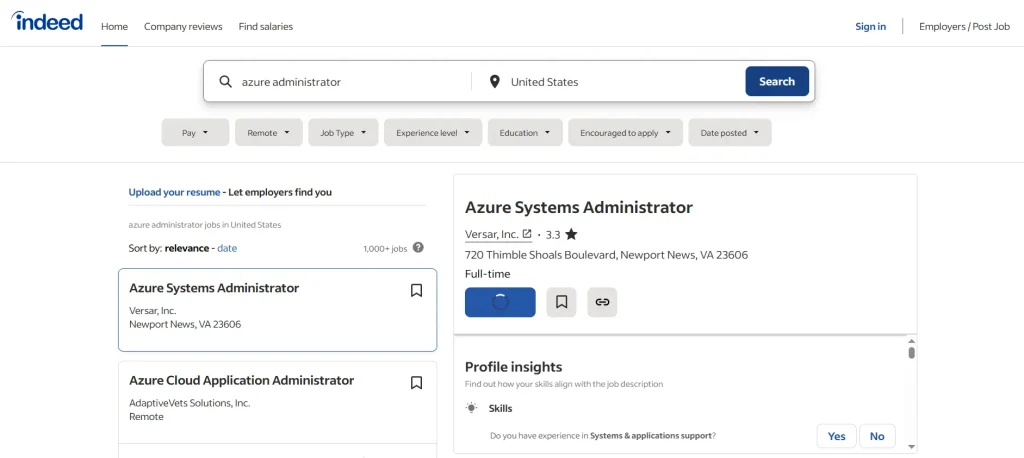

Our research shows over 3,000+ open roles on major job boards. These aren’t just for “Azure Administrators” but also for titles like “Systems Administrator,” “Infrastructure Engineer,” and “Technical Architect.” Salaries for senior roles are strong, frequently landing in the $130,000 to $180,000 range, making it one of the highest-paying Microsoft Azure certifications.
The Azure Developer (AZ-204) Job Landscape
The AZ-204 path leads to specialized, high impact software engineering roles.

We found over 3,000+ developer positions on LinkedIn alone. The job titles are focused on software creation: “Software Engineer,” “Cloud Developer,” and “Senior Azure DevOps Developer.” The salary potential is exceptionally high, with senior positions often ranging from $130,000 to $250,000.
Voices from the Field: Which Exam Is Harder?
We analyzed discussions on Reddit to see what certified professionals think about exam difficulty. The verdict was clear.
- Difficulty depends on your background. The exam outside your daily experience will be harder.
- AZ-104 is challenging for developers who often need to learn networking and infrastructure concepts from scratch. Consider starting with the fundamentals by comparing AZ-900 vs AZ-104.
- AZ-204 is nearly impossible for non developers. If you can’t read and understand code, you won’t be able to pass.
Career Paths, Salary, and Next Steps
Both certifications are excellent springboards to more advanced roles and are highly valued in the industry. For a complete overview, check out this guide to all Microsoft certifications.
- The Administrator Path (AZ-104): After gaining experience as an Azure Administrator, many professionals advance to roles like Cloud Architect or IT Manager. The natural next certification is the AZ-305: Azure Solutions Architect Expert.
- The Developer Path (AZ-204): Developers can progress to Senior Developer, DevOps Lead, or Solutions Architect positions. The AZ-204 is a direct prerequisite for the AZ-400: Azure DevOps Engineer Expert certification.
Both certifications lead to highly secure jobs with competitive six-figure salaries. The choice should be based on your skills and interests, not perceived security or salary alone.
Conclusion: Which Path Should You Choose?
Your decision should be simple and based on your passion and experience.
Choose AZ-104 (Administrator) if:
- You have a background in IT operations, networking, or systems administration.
- You enjoy managing, securing, and optimizing infrastructure.
- You prefer scripting with PowerShell/CLI over application coding.
Choose AZ-204 (Developer) if:
- You are a software developer who loves to code.
- You want to build and deploy modern, cloud-native applications.
- You are comfortable working with APIs, SDKs, and databases.
For more information, browse our full list of articles on Microsoft Certifications.
Frequently Asked Questions (FAQ)
How important are hands-on labs in the AZ-104 and AZ-204 exams?
Hands-on labs are a critical component of both exams. For the AZ-104, you might be asked to perform real administrative tasks in a live Azure Portal, like configuring a Network Security Group. For the AZ-204, scenarios are more developer-focused, potentially requiring you to complete or debug code snippets. Microsoft uses these labs to ensure candidates have practical, real-world skills, so extensive hands-on practice during your preparation is absolutely essential.
Which certification is more “future-proof”?
Both paths are extremely future-proof. Infrastructure-as-Code (IaC) and FinOps are making the administrator role more strategic and code-adjacent. Simultaneously, the growth of AI, serverless computing, and microservices is making the developer role more crucial than ever for innovation. Neither path is becoming obsolete; they are both evolving into more specialized, high-demand careers, ensuring long-term relevance for certified professionals in either track.
What does the annual certification renewal process actually involve?
The annual renewal is a free, online assessment on the Microsoft Learn platform. It’s unproctored and “open book,” meaning you can consult Microsoft’s documentation. The assessment is shorter than the full exam and focuses only on technology updates from the past year to ensure your skills remain current. You have a six-month window before your certification expires to complete and pass the assessment, extending your certification for another year.
Can I get an Azure Administrator job with just the AZ-104?
Yes, but having developer adjacent skills makes you a much stronger candidate. While you don’t need to be a coder, understanding basic scripting with PowerShell for automation is essential for an administrator. Furthermore, having a high-level understanding of how applications are deployed (CI/CD) and consume resources allows you to better support development teams and troubleshoot issues more effectively, making you a more valuable team member.
More Certification Comparisons
Compare scope, difficulty, prep time, and career impact—side by side.
PassITExams vs ExamTopics
Which Platform is Best for IT Certification Exam Preparation?
PassITExams vs Skillcertpro
The Ultimate Guide to Choosing Your IT Certification Success Partner
PassITExams vs Pass4sure
A Critical Examination of Certification Preparation Platforms
CTFA vs CFP
Choosing the Right Financial Designation for a Career in Fiduciary and Wealth Management
Splunk vs Elastic
The Ultimate Comparison for Logging, SIEM, and Observability
IBM QRadar vs Splunk
The Ultimate SIEM Comparison for Modern Security Operations
SageMaker vs Bedrock
Choosing the Right Engine for Your AI Strategy in 2026
az-104 vs az-400
our Definitive Azure Career Path for 2026 (Admin vs. DevOps)
AZ-104 vs AI-900
Azure Admin Associate Or AI Fundamentals?
AZ-104 vs PL-300
Azure Admin or Data Analyst? (Salary & Jobs)
AZ-104 vs AZ-500
Which Azure Certification Is Right for Your Career?
AZ-900 vs CLF-C02
Which Foundational Cloud Cert Unlocks the Best Jobs and Salaries?
AZ-900 vs SAA-C03
Which Cloud Certification is Right for You?
RHIT vs RHIA
Which Health Information Credential Is Right for You?
AZ-900 vs DP-900
Which Azure Certification Should You Take First?
AZ-900 vs SC-900
Choose Your Microsoft Certification Path
AZ-900 vs AI-900
Which Azure Fundamentals Certification Is Your Launchpad?
AZ-204 vs AZ-305
The Builder vs. The Architect
AZ-900 vs AZ-204
Which Microsoft Azure Certification is Right for You?
az-204 vs pl-300
Building the Engine or Charting the Course?
AZ-900 vs AZ-400
Foundational vs. Expert: Complete Guide for Your Azure Career
601 vs 601
CompTIA Security+ 601 vs 701: The Ultimate Comparison Guide
Data Engineer vs Data Scientist
The Ultimate Comparison Guide
AWS vs Azure
The Ultimate Comparison for Certification & Career
CISSP vs SecurityX
Which Certification Will Define Your Cybersecurity Career?
AWS vs Azure
Who is Leading the Cloud Race?
AWS vs Azure
Which Cloud Certification is Paying High?
AZ-104 vs AZ-305
Administrator vs. Architect – Your Ultimate Azure Guide
AZ-104 vs AZ-204
The Ultimate Guide for Your Azure Career
ISSA vs NASM
Which Personal Trainer Certification Is Best for You?
Salesforce Admin vs Salesforce Developer
Unlocking Your Earning Potential in the Salesforce Ecosystem
CISSP vs CCSP
Your Ultimate Guide to a Career in Cloud Security
CRISC vs CISSP
Mastering Risk Management and Information Security
CISSP vs CEH
Your Guide to Mastering Offensive and Defensive Security
CISSP vs PMP
Unlocking Dual Expertise in Security and Project Management
CISSP vs Security+
Choosing the Right Certification to Boost Your Earning Potential
CISSP vs OSCP
Choosing the Right Certification for a Six-Figure Cybersecurity Career
CISSP vs CISM
Which Certification Will Truly Elevate Your Cybersecurity Career?
Azure vs AWS
How to Choose the Right Cloud Platform for Your Business
AZ-900 vs AZ-700
MIcrosoft Career Blueprint: From Azure Fundamentals to Networking
AZ-900 vs AZ-104
Azure Career Blueprint: Your Path from Azure Fundamentals to Azure Administrator
AZ-104 vs SAA-C03
Azure Administrator vs. AWS Architect: Which Career Path Wins?
AZ-900 vs MS-900
Your ultimate Microsoft fundamentals showdown.
