
In the dynamic world of cloud computing, Microsoft Azure certifications are a clear signal of expertise and commitment. They are the benchmarks that hiring managers use to identify top talent in a crowded field. For those mapping out their professional journey, two certifications often come up, representing the very beginning and a pinnacle of achievement: the AZ-900: Microsoft Azure Fundamentals and the AZ-400: Designing and Implementing Microsoft DevOps Solutions.
But comparing these two is like comparing a driver’s permit to a commercial pilot’s license. One is the essential first step for anyone who wants to get on the road; the other is an expert-level credential for professionals who design and manage the entire transportation system. Choosing where to focus your energy is critical, and understanding the vast difference between these two paths is the key to planning a successful and rewarding Azure career.
This guide will provide an exhaustive comparison, enriched with real-world data and community insights, to give you the clarity needed to navigate your Azure certification journey.
At a Glance: Foundational vs. Expert (AZ-900 vs AZ-400)
Before we dive deep, this table provides a high-level summary of the profound differences between these two exams.
| Feature | AZ-900: Microsoft Azure Fundamentals | AZ-400: Azure DevOps Engineer Expert |
|---|---|---|
| Your Role | You are learning the “language” of the cloud. | You are an experienced professional orchestrating the entire software lifecycle. |
| Core Focus | What is the cloud? Core concepts, services, and benefits. | How to build, test, and release software efficiently and reliably using DevOps principles. |
| Ideal For | Everyone: Beginners, sales, managers, IT pros new to Azure. | Experienced Azure Administrators (AZ-104) or Azure Developers (AZ-204). |
| Coding Needed? | No. | Yes. Extensive proficiency with scripting (PowerShell/CLI) and Infrastructure as Code (ARM/Bicep/Terraform) is required. Familiarity with YAML is essential. |
| Prerequisites | None. This is the starting point. | Required: Must have already passed either the AZ-104 or AZ-204 exam. |
| Exam Cost | ~$99 USD (varies by region) | ~$165 USD (varies by region) |
| Renewal | Does not expire. | Free, annually via an online assessment on Microsoft Learn. |
| Level | Foundational | Expert |
Deep Dive: The AZ-900 Azure Fundamentals Path (The Starting Line)
The AZ-900 certification is the universally recognized entry point into the Microsoft Azure ecosystem. Think of it as your passport. It doesn’t guarantee you a specific job, but it is absolutely essential to get past the first gate. It proves you have a foundational, non-technical understanding of cloud services and their benefits. This certification is perfect for you if you are just beginning your cloud journey or if you are in a non-technical role and need to speak the language of the cloud with your technical colleagues.

What You’ll Master with AZ-900
The AZ-900 exam tests your conceptual knowledge, not your hands-on technical ability. It is broken down into three core domains.
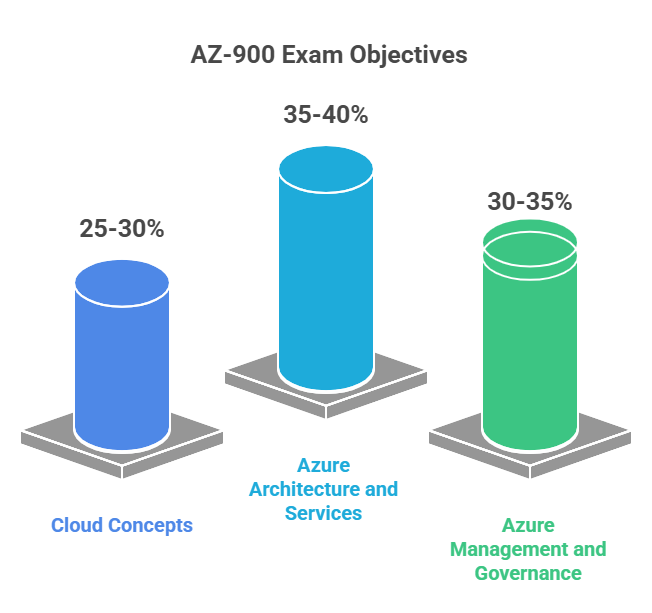
1. Describe Cloud Concepts (25-30%)
This is the “why” of cloud computing. It’s about understanding the business value of moving to the cloud. You’ll need to master the differences between Capital Expenditure (CapEx) and Operational Expenditure (OpEx), and explain core cloud characteristics like High Availability, Scalability, and Fault Tolerance. You will also be tested on the different service models: Infrastructure-as-a-Service (IaaS), Platform-as-a-Service (PaaS), and Software-as-a-Service (SaaS).
- Real-world concept: You are in a meeting with a finance manager. You need to explain how moving from buying and maintaining physical servers (CapEx) to paying a monthly fee for Azure VMs (OpEx) can improve the company’s cash flow and reduce upfront costs.
2. Describe Azure Architecture and Services (35-40%)
This domain is a high-level tour of the most important Azure services. You won’t be configuring them, but you need to know what they are and when to use them. This includes core compute services like Azure Virtual Machines (VMs) and Azure App Service, storage services like Blob Storage, and networking components like Virtual Networks (VNets).
- Real-world concept: A project manager asks for the best place to store millions of user-uploaded image files. You would identify Azure Blob Storage as the ideal service for unstructured, scalable object storage.
3. Describe Azure Management and Governance (30-35%)
This section focuses on the tools used to manage and secure an Azure environment. You’ll learn about tools for ensuring security like Microsoft Defender for Cloud, maintaining privacy and compliance with Azure Policy, and managing costs with Cost Management and Billing.
- Real-world concept: Your company wants to prevent developers from accidentally creating very expensive, high-performance VMs in a non-production environment. You would describe how Azure Policy can be used to enforce rules that restrict which VM sizes can be deployed.
For in-depth and study strategies related to AZ-900, feel free to explore additional resources like this AZ-900 exam guide.
Deep Dive: The AZ-400 Azure DevOps Engineer Path (The Expert Goal)
The AZ-400 certification is an expert-level credential for seasoned professionals who have already proven their skills as either an Azure Administrator or an Azure Developer. An Azure DevOps Engineer is a master orchestrator, responsible for managing the entire software development lifecycle from source code management to automated deployments and ongoing monitoring. This role is about breaking down silos between development and operations teams to deliver better software, faster.

What You’ll Master with AZ-400
The AZ-400 is a deeply technical exam focused on process, automation, and collaboration.
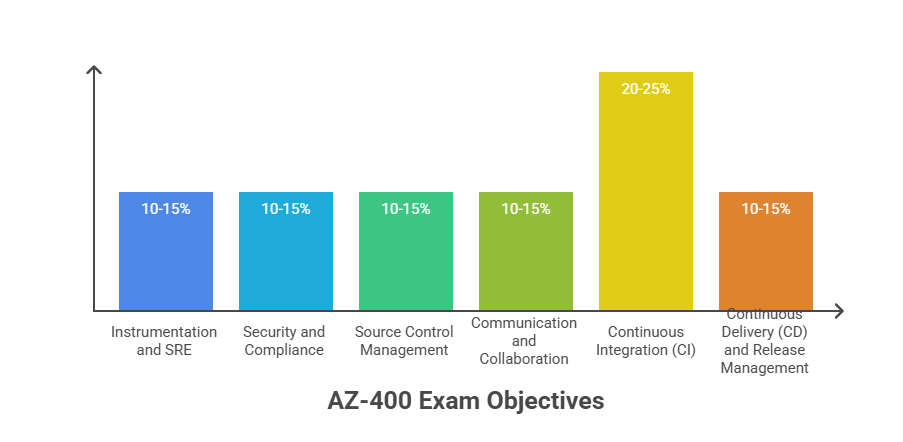
1. Develop Security and Compliance Plans & Manage Source Control (20-30%)
This domain covers the crucial “shift-left” security principles of DevSecOps. You must know how to integrate security scanning tools (SonarQube, Mend, GitHub Advanced Security) into your pipelines and manage secrets securely with Azure Key Vault. A deep understanding of Git for source control is absolutely essential.
- Real-world task: You must design a Git branching strategy (like GitFlow) for your development team and configure branch policies in Azure Repos to require a successful build and a peer review before any code can be merged into the main branch.
2. Facilitate Communication and Collaboration & Define CI (25-35%)
This is the heart of DevOps. You’ll need to master designing and implementing a Continuous Integration (CI) strategy using Azure Pipelines. This includes creating build pipelines from scratch using YAML, integrating automated tests, and managing build agents.
- Real-world task: You are tasked with creating a YAML-based CI pipeline for a .NET web application. The pipeline must automatically trigger on a push to the main branch, restore dependencies, build the project, run unit tests, and publish the final build artifacts.
3. Define and Implement a CD and Release Management Strategy (20-30%)
This domain is about getting your built application into the hands of users. You must be able to design a Continuous Delivery (CD) and release strategy, including concepts like deployment rings, A/B testing, and blue-green deployments. You will be tested on creating release pipelines in Azure Pipelines and managing deployment approvals.
- Real-world task: Your company wants to deploy a new feature to a small subset of users before a full rollout. You would configure a release pipeline with multiple stages and use deployment gates and feature flags to control the release process, minimizing risk.
4. Develop an Instrumentation and SRE Strategy (10-20%)
This section covers monitoring and maintaining the health of your applications and infrastructure. You will need to know how to develop a strategy for logging and telemetry using Azure Monitor and Application Insights and understand the principles of Site Reliability Engineering (SRE), such as defining Service Level Objectives (SLOs) and error budgets.
- Real-world task: You must use Application Insights to analyze the performance of a production web app, identify a slow-running database query that is causing high latency, and create an alert that notifies the team if the application’s availability drops below 99.9%.
Our Exclusive Research: A Data-Backed Look at the Azure Job Market
Our research team has performed extensive research on major job portals to curate the latest data for you regarding AZ-400 (Azure DevOps Engineer Expert) and AZ-900 (Azure Fundamentals) job trends.
SEE MORE: Highest Paying Microsoft Certification
Glassdoor: High Demand for Azure Cloud and DevOps Engineers
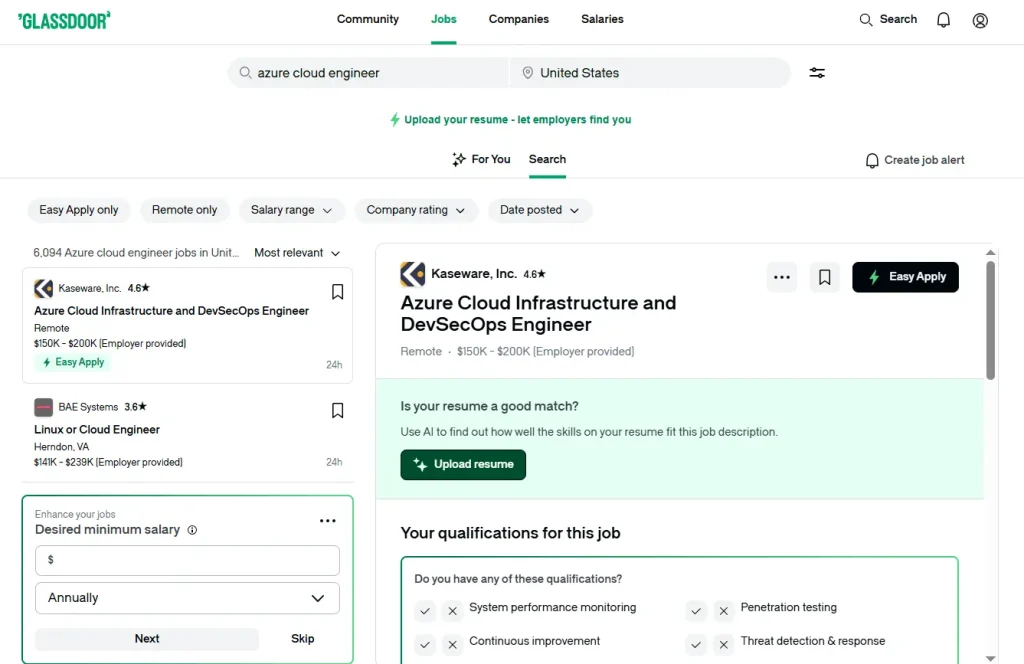
This Glassdoor screenshot, showing over 6094 Azure cloud engineer jobs in the United States, provides strong evidence of the high demand for professionals skilled in Microsoft Azure. The “Security and Compliance Engineer” role at TAB Computer Systems, Inc., with an estimated salary range of $85K – $125K, highlights the critical intersection of cloud engineering and cybersecurity a common pathway for those with AZ-900 (fundamentals) knowledge looking to specialize.
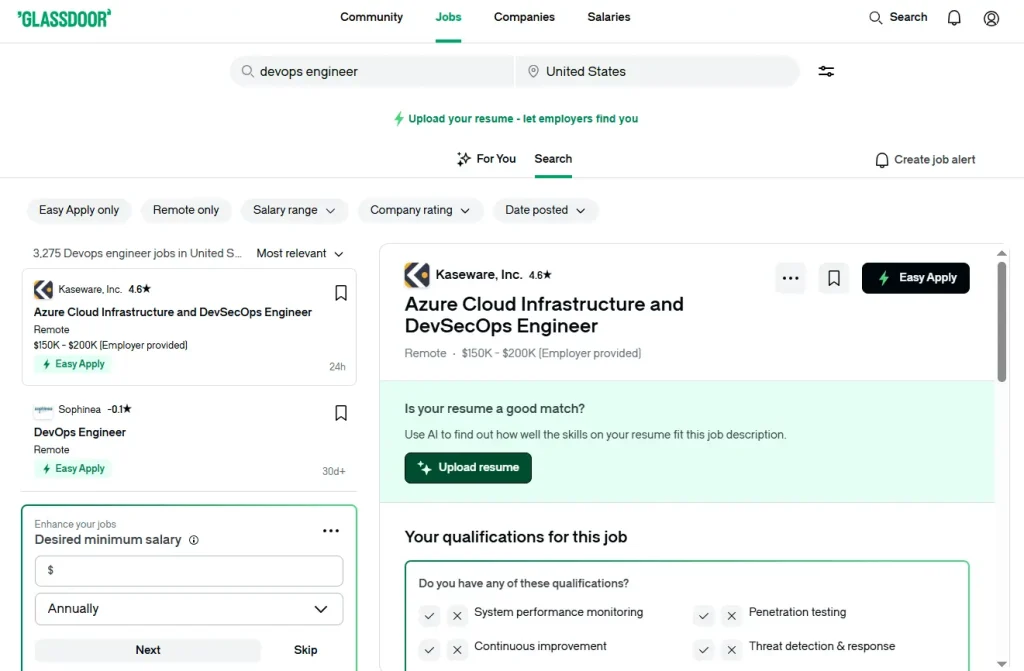
Complementing the Azure Cloud Engineer data, this Glassdoor screenshot focuses on “DevOps Engineer” roles, with over 3,203 jobs in the United States. This category is highly relevant for those pursuing the AZ-400 certification, which specifically targets Azure DevOps expertise. The “Infrastructure Engineer” role, offering $130K – $250K, further emphasizes the high earning potential for experienced DevOps professionals.
Voices from the Field: A Real-World Learning Path
To understand how these certifications fit into a real career, we analyzed a journey documented by a professional on Reddit’s /r/AzureCertification forum. This user, with a decade of on-premise sysadmin experience, provided a perfect case study.
- The Start: AZ-900. The user described the AZ-900 as a “good overview” and a necessary first step, even with their extensive IT background. It took them one month of study to pass, confirming its role as a foundational knowledge check that brings experienced professionals up to speed on cloud terminology and concepts.
- The Real Work: AZ-104. The journey then progressed to the AZ-104 Azure Administrator exam. This is where the user noted the “real work” began, highlighting a significant jump in difficulty from the AZ-900. This step is crucial, as it builds the practical, hands-on skills that are a prerequisite for the AZ-400.
- The Expert Level: AZ-400. Finally, they tackled the AZ-400, calling it a “different beast” entirely. Their key insight was that the AZ-400 is not just about Azure technology but about the DevOps process. They emphasized the importance of knowing Git, YAML pipelines, security scanning tools, and Infrastructure as Code. This real-world experience confirms that AZ-400 is an expert-level exam that builds upon, but is vastly different from, the foundational knowledge of AZ-900.
Career Paths, Salary, and Next Steps
These two certifications are not competing paths but rather sequential milestones on a long and rewarding career journey.
- The AZ-900 Path: The AZ-900 does not lead directly to a job. Its purpose is to prepare you for an associate-level certification. The next step after AZ-900 is to choose your specialization: AZ-104 for Administrators or AZ-204 for Developers.
- The AZ-400 Path: The AZ-400 is a destination. It validates your expertise for one of the most in-demand roles in tech: the DevOps Engineer. Salaries for this role are exceptionally high, frequently ranging from $130,000 to $180,000+ for experienced professionals. After achieving this expert certification, many DevOps Engineers progress to roles like Cloud Architect or SRE Manager.
Conclusion: Which Path Is for You?
The choice between AZ-900 and AZ-400 isn’t a choice at all—it’s a matter of timing and experience.
- Choose AZ-900 if:
- You are new to cloud computing.
- You are in a non-technical role and need to understand Azure.
- You are an experienced IT professional just beginning your Azure journey.
- Choose AZ-400 if:
- You are an experienced Azure professional.
- You have already passed the AZ-104 or AZ-204 exam.
- You want to validate your expertise in building and managing CI/CD pipelines and automating the software lifecycle.
The journey to becoming an Azure DevOps Engineer Expert is long, but it begins with the first step. That first step is, and always should be, the AZ-900 Fundamentals.
Frequently Asked Questions (FAQ)
Is AZ-900 a mandatory prerequisite for AZ-400?
No, it is not an official prerequisite. However, the AZ-104 or AZ-204 is a mandatory prerequisite for the AZ-400. In practice, it is nearly impossible to pass the AZ-104 or AZ-204 without first having the foundational knowledge covered in the AZ-900.
How much more difficult is AZ-400 than AZ-900?
The difference is immense. The AZ-900 is a multiple-choice, conceptual exam that can be passed with a few weeks of study. The AZ-400 is an expert-level exam that requires deep, hands-on experience with source control, automation, scripting, and the entire DevOps toolchain. It typically requires many months of dedicated study and practical application.
I am not a developer. Can I still pass the AZ-400?
Yes, but it will be challenging. Many successful AZ-400 holders come from an administration background (via the AZ-104 path). However, you must be willing to learn and become proficient in scripting, Infrastructure as Code (ARM/Bicep), and YAML for pipeline creation. You don’t need to be a software developer, but you must be comfortable with code.
What are the best study materials for these exams?
For the AZ-900, the Microsoft Learn path combined with video courses is usually sufficient. For the AZ-400, a multi-faceted approach is critical. In addition to Microsoft Learn, you will need extensive hands-on labs and high-quality practice exams. For a structured approach to your studies, consider using reliable exam dumps and resources from a trusted provider like PassITExams.
