



PassITExams: Your Go-To Resource for AI-901 Certification Success
If you’re planning to earn the Microsoft Certified: Azure AI Fundamentals credential through the AI-901 exam, you’ve come to the right place. The exam tests not just if you can describe Azure AI services, but also if you can actually apply those concepts to build real AI solutions using Microsoft Foundry.
At PassITExams, our AI-901 dumps are built around exactly what this exam demands. Our team of certified professionals has mapped every question to the verified exam blueprint published by Microsoft. So when you work through our materials, you’re not guessing at what might show up, you’re practicing the actual skills and scenarios the exam targets. We know how frustrating it is to prepare hard and still feel uncertain on test day. Our job is to make sure that doesn’t happen to you.
How PassITExams Gets You Ready for the AI-901 Exam
Getting prepared for a certification that blends conceptual knowledge with hands-on implementation isn’t as simple as reading a textbook. The AI-901 expects you to understand AI principles and then demonstrate how to apply them through Microsoft Foundry, including building lightweight chat applications, deploying models, creating agents, and extracting information from documents, images, audio, and video. That’s a wider range of skills than most entry-level exams test.
Here’s how our preparation method works. We start with the official AI-901 exam study guide on Microsoft Learn as the foundation. Every question in our bank is cross-checked against the skills listed there, so nothing in our AI-901 practice test goes off-script. Our question writers don’t just know Azure, they’ve worked with Microsoft Foundry in real environments, which means the scenario-based questions feel authentic rather than theoretical.
Our PDF dumps are clean, well-organized, and easy to read on any device. You can print them, annotate them, or load them on your tablet during a commute. When you’re ready for a more realistic experience, switch to our online exam simulator. It replicates the actual test interface, timed sessions, question navigation, and domain-level scoring, so the real exam feels familiar when you get there.
Before you register, take a moment to review the official AI-901 exam page on Microsoft Learn for the latest scheduling details and language availability.
Microsoft Certified: Azure AI Fundamentals, AI-901 Complete Exam Overview
Who Is This Exam Designed For?
The AI-901 sits at the fundamentals level, but it’s worth being clear about what that actually means for this particular exam. This is not a zero-experience certification. Microsoft is upfront about it: candidates are expected to have basic familiarity with Python coding syntax, some understanding of cloud concepts like storage, compute, and authentication, and a conceptual grasp of how Azure-based AI solutions work.
That said, it’s still very accessible. You don’t need to be a software engineer or data scientist. Here’s who gets the most value from passing this exam:
- Junior and entry-level developers who are starting to add AI features to applications will find this certification validates exactly the kind of work they’re beginning to do. Building a lightweight chat client using the Foundry SDK, deploying a model, or creating a basic agent, these are precisely the tasks the exam covers.
- IT professionals and cloud administrators who support Azure environments and want to understand the AI layer well enough to have informed conversations with development teams. The responsible AI principles section alone is worth knowing if you’re involved in technology decisions.
- Students and career-changers moving into tech who want a credible, current Microsoft credential. The AI-901 reflects where AI development is going in 2026, Microsoft Foundry is central to how Microsoft positions AI solution development, so this certification carries real forward-looking relevance.
- Business analysts and technical consultants who need working knowledge of how AI apps and agents are built on Azure, even if they’re not writing the code themselves. Understanding the Foundry portal, model deployment options, and responsible AI considerations puts you in a much stronger position in client conversations.
- Developers transitioning from other platforms to Azure who want to quickly establish their Microsoft AI credentials before pursuing the more advanced AI-103 (Azure AI App and Agent Developer Associate) or AI-200 (Azure AI Cloud Developer Associate) certifications.
Exam Format and Structure
- Questions: 40–60 questions per attempt
- Time limit: 45 minutes
- Passing score: 700 out of 1,000 (scaled scoring model)
- Question types: Multiple choice (single answer), multiple response (two or three correct answers), drag-and-drop matching, hotspot
- Case studies: None, all questions are standalone; you can go back and change answers
- Delivery options: Online proctored from home or office, or in-person at a Pearson VUE testing center
- Score report: Pass/fail shown immediately; full domain-level breakdown in your Microsoft Learn profile within minutes
- Languages: English, Japanese, Chinese (Simplified and Traditional), Korean, German, French, Spanish, Portuguese (Brazil), Russian, Indonesian, Arabic, Italian
You can check your results and certification status at any time through the Microsoft Learn scores and transcripts portal.
AI-901 Exam Domains and Skills Measured
The following is drawn directly from the official AI-901 Skills Measured document on Microsoft Learn. This is the authoritative source, and these two domains are structured very differently from the five-domain layout of the older AI-900.
Domain 1, Identify AI Concepts and Capabilities (40–45%)
This domain covers the foundational knowledge side of the exam. It’s split into three skill groups, and together they account for 40 to 45 percent of your total score. Don’t underestimate it just because it sounds conceptual, the questions here are scenario-driven and require genuine understanding, not just recall.
Describe Principles of Responsible AI
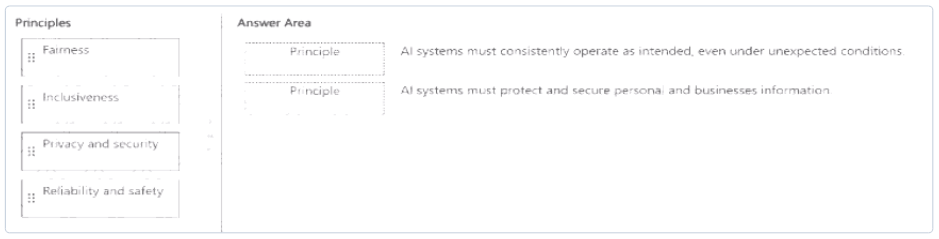
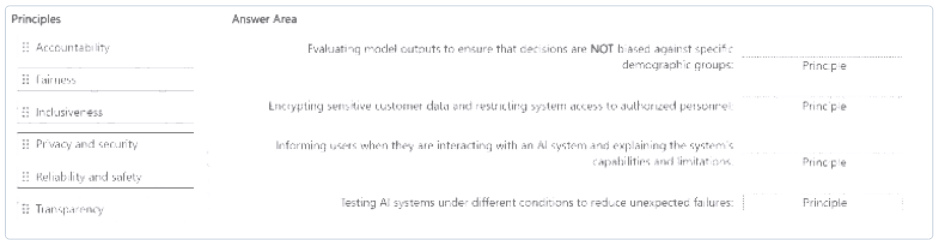
Microsoft’s responsible AI framework is woven into this exam just as it was in AI-900, but the AI-901 now asks you to apply these principles in the context of real solution development rather than simply describing them in the abstract. You need to be comfortable with all six principles:
- Fairness, recognizing how AI systems can produce biased outcomes and what measures address this
- Reliability and safety, understanding that AI systems must behave consistently and handle failure gracefully
- Privacy and security, knowing how user data is protected within AI solutions and why it matters
- Inclusiveness, ensuring AI solutions are accessible and designed to benefit a wide range of users
- Transparency, being able to explain how an AI model reaches its conclusions
- Accountability, understanding who is responsible for the outcomes of AI systems and decisions
These principles show up across both domains. Candidates who treat this as a memorization exercise often get tripped up by scenario questions where the “right” principle to apply isn’t immediately obvious.
Identify AI Model Components and Configurations
This skill group moves into generative AI territory. You’ll need to understand how generative AI models actually work, not at an engineering level, but conceptually. The exam tests whether you can identify an appropriate AI model based on the capabilities it offers, and whether you understand the key deployment options and configuration parameters involved when putting a model into production.
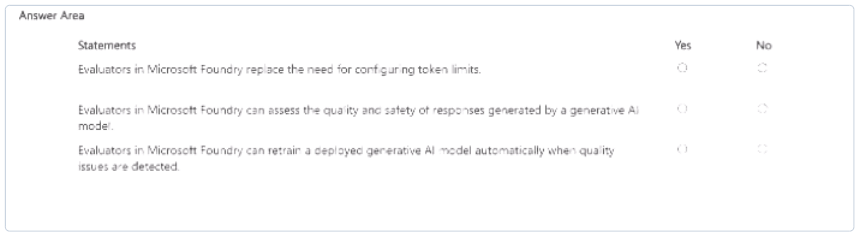
This includes knowing the difference between model types, understanding what configuration choices like temperature and token limits affect, and being able to match a business scenario to the right model type. Knowing when to use a multimodal model versus a language-only model is exactly the kind of judgment this section evaluates.
Identify AI Workloads
This is the broadest skill group in Domain 1. It covers the full range of AI workload types, and you need to be able to recognize the right approach for each scenario:
- Generative and agentic AI, identifying use cases where generative models or AI agents are the appropriate solution
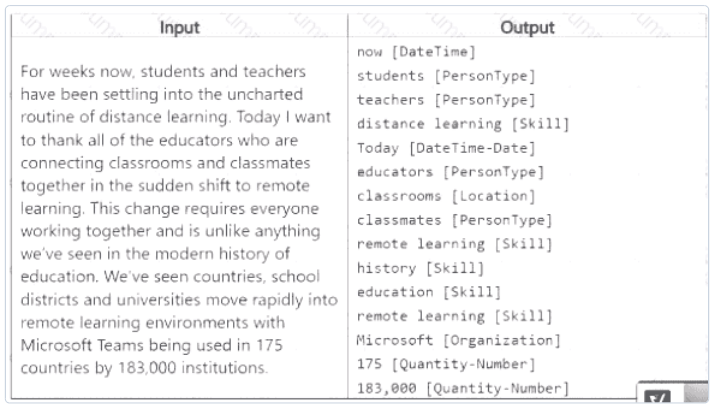
- Text analysis techniques, keyword extraction, entity detection, sentiment analysis, and summarization; knowing when each technique fits a given problem
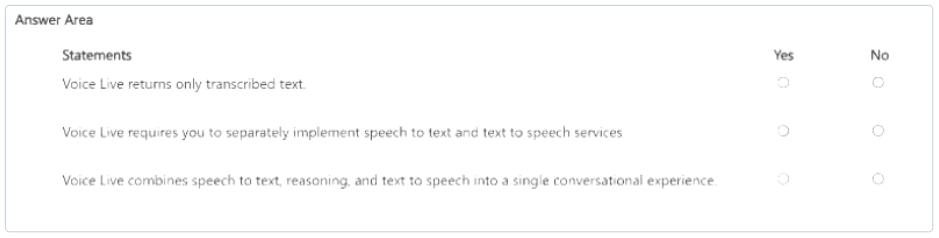
- Speech recognition and synthesis, understanding the capabilities and typical use cases for speech-to-text and text-to-speech
- Computer vision and image generation, recognizing what computer vision can do (classification, detection, OCR) and what image generation models produce
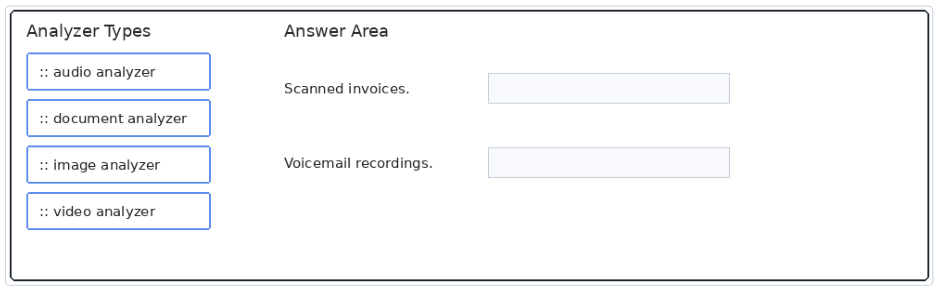
- Information extraction from multiple media, identifying how information can be pulled from text, images, audio, and video using Azure AI services
Candidates who cover Domain 1 well usually find Domain 2 more manageable, because the conceptual grounding they’ve built makes the implementation scenarios much clearer.
Domain 2, Implement AI Solutions by Using Microsoft Foundry (55–60%)
This is the heavier domain, 55 to 60 percent of the exam. It’s also what makes AI-901 genuinely different from anything that came before it at this certification level. The whole domain is centered on Microsoft Foundry (the platform formerly known as Azure AI Foundry / Azure AI Studio), and it’s organized into four practical skill groups.
The emphasis here is on doing, not just knowing. You’re expected to understand how to build things, lightweight applications, agents, vision solutions, information extraction pipelines, using Foundry and its connected tools. You don’t need to be an expert developer, but you do need to know what the Foundry portal looks like, how to move through a typical workflow, and what tools are available for each type of AI task.
Implement Generative AI Apps and Agents Using Foundry
This skill group is the heart of the exam. You need to know how to:
- Write effective system and user prompts, understanding the difference between them, and knowing what makes a prompt well-designed for a specific use case
- Deploy a model in the Foundry portal and interact with it to verify it’s working as expected
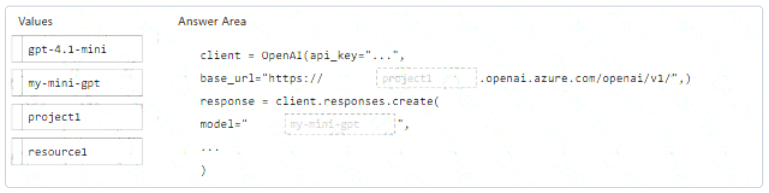
- Build a lightweight chat client application using the Foundry SDK, not a full production app, but enough to demonstrate you understand the development flow
- Create and test a single-agent solution directly in the Foundry portal, understanding how agents differ from standard model calls
- Build a lightweight client application that connects to and interacts with a deployed agent
This section rewards candidates who have actually opened the Foundry portal and tried things, even in a free Azure account. Reading about it helps, but hands-on familiarity with the interface makes a significant difference.
Implement AI Solutions for Text and Speech Using Foundry
Azure’s language and speech capabilities are still on the exam, but now they’re taught in the context of Foundry rather than as standalone services:
- Build a lightweight application that includes text analysis capabilities, pulling in sentiment analysis, key phrase extraction, or entity recognition through the Foundry toolchain
- Respond to spoken prompts by connecting a deployed multimodal model to audio input, this requires understanding how speech flows into and out of an AI solution
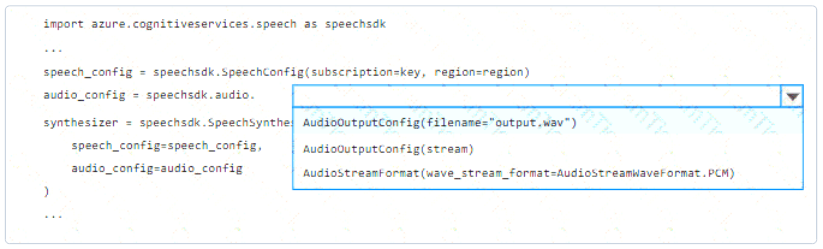
- Use Azure Speech in Foundry Tools to build a lightweight voice-enabled application, knowing what the Speech service provides and how to access it through the Foundry interface
Implement AI Solutions with Computer Vision and Image-Generation Capabilities Using Foundry
Vision has moved significantly in AI-901 compared to the older exam. It’s no longer just about identifying what Azure AI Vision does, it’s about building with it:
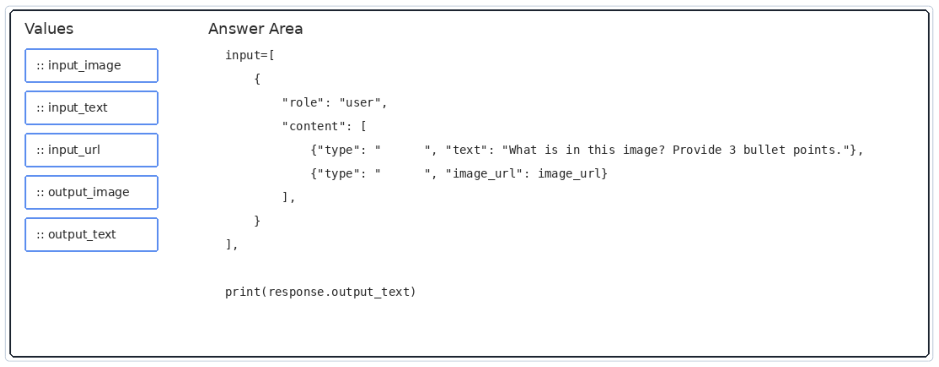
- Interpret visual input in prompts using a deployed multimodal model, which means understanding how to pass image data into a model and get meaningful output
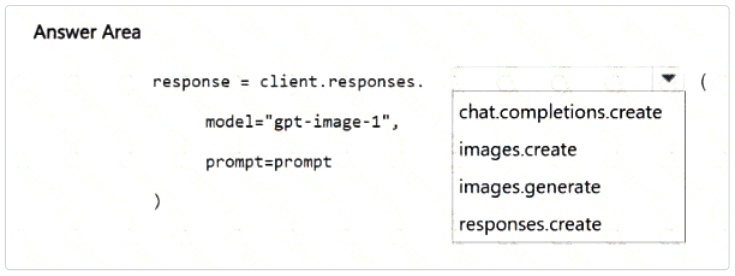
- Create new visual outputs using generative models, understanding what image generation models can produce and what controls the quality of the output
- Build a lightweight application that includes vision capabilities, connecting the Foundry portal to image analysis or generation workflows
Implement AI Solutions for Information Extraction Using Foundry
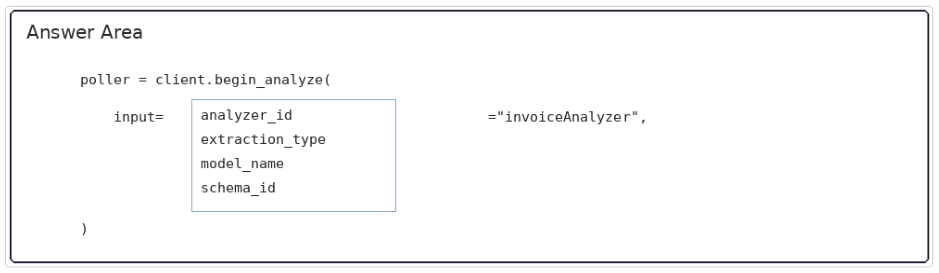
This skill group is largely in AI-901, centering on Azure Content Understanding, a service that extracts structured information from unstructured sources:
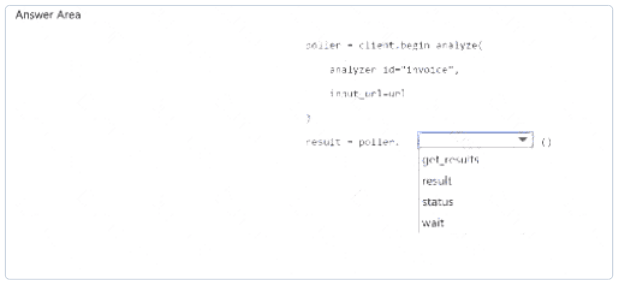
- Extract information from documents and forms using Azure Content Understanding in Foundry Tools
- Extract information from images, going beyond basic OCR to pull meaningful structured data from visual content
- Extract information from audio and video, applying Content Understanding to media files to surface relevant information
- Build a lightweight application with information extraction capabilities using Content Understanding
This last skill group is where many candidates have the least background, simply because Content Understanding is relatively new. Give it extra attention in your preparation.
Cost, Prerequisites, and Eligibility
Exam cost: Microsoft prices AI-901 in line with other fundamentals-level certifications, typically around $165 USD (pricing varies by country, always verify current pricing on the official exam registration page).
Prerequisites: No prior Microsoft certification is required. However, Microsoft recommends that you have:
- Basic familiarity with Python coding syntax and general programming concepts
- Working knowledge of core cloud concepts, storage, compute, authentication, authorization
- Conceptual understanding of Azure-based AI solutions and how cloud-hosted AI services work
Retake policy: If you don’t pass on your first attempt, Microsoft requires a 24-hour waiting period before a second try. After a second failure, the wait extends to 14 days. Beyond five failures within a 12-month period, you’ll need to wait a full year before attempting again.
Certification validity: The Microsoft Certified: Azure AI Fundamentals credential earned through AI-901 does not expire. Unlike associate and expert-level certifications, fundamentals certifications are permanent once earned.
You may also be eligible for ACE college credit if you pass this certification, check the Microsoft Learn certification page for details on academic credit options.
Why the AI-901 Certification Carries Real Weight in 2026
Let’s be direct: the AI-901 is arriving at exactly the right moment. Companies of every size are integrating AI into their products, workflows, and decision-making processes. The demand for people who understand how to build with AI, even at a foundational level, has grown faster than the supply of trained candidates. That gap is where this certification positions you.
The job market numbers reflect this clearly. Professionals in Azure AI-related roles in the United States are seeing average annual salaries around $121,000, with experienced practitioners earning well over $150,000 according to 2026 salary data. But the AI-901 is rarely a final destination, it’s the starting line. The certification opens the door to advanced role-based paths: the AI-103 Azure AI App and Agent Developer Associate, the AI-200 Azure AI Cloud Developer Associate, and further specializations in machine learning and data science. Each step up the ladder represents a meaningful salary jump.
Beyond the money, there’s the practical reality that Microsoft Foundry is now the central platform for AI solution development across the Azure ecosystem. Understanding how to navigate it, deploy models through it, and build applications on top of it is a genuinely marketable skill, not just a certification checkbox. The AI-901 proves you have that foundation.
For employers, the certification provides a verifiable signal. When a candidate lists AI-901 on their resume, it tells a hiring manager they understand responsible AI principles, can work with Microsoft’s AI tooling, and have at least entry-level competency in building AI-powered applications. In a field where AI claims on resumes often outpace actual knowledge, that verification matters.
To explore how this certification fits into the broader Microsoft AI career path, the Microsoft Certification Catalog gives you a full picture of where AI-901 leads and how it connects to more advanced credentials.
A Study Plan That Actually Works for AI-901
The AI-901 is different from most fundamentals exams because it rewards hands-on exposure, not just reading. Here’s a realistic approach to preparing efficiently.
- Start with the official training course: Microsoft has released Course AI-901T00-A: Introduction to AI in Azure, which is the instructor-led curriculum specifically built for this exam. If you prefer self-paced study, the two recommended Microsoft Learn paths, one covering AI concepts and one on getting started with AI apps and agents, cover the same ground at your own pace. Use these as your conceptual foundation before touching any practice questions.
- Get hands-on with Microsoft Foundry early: You don’t need a paid Azure subscription for everything. A free Azure account gives you access to Foundry features. Spend time deploying a model, poking around the portal, and building a basic chat prompt. The exam’s Domain 2 questions will feel very different if you’ve actually navigated the interface versus just reading about it.
- Weight your study time toward Domain 2: It accounts for 55–60% of the exam, and it covers skills that are newer and less documented than traditional Azure AI service concepts. Plan to spend roughly two-thirds of your total study time here.
- Don’t ignore the responsible AI section: This is one of those topics where candidates assume they already know enough, then get caught by nuanced scenario questions. Work through each of the six principles, fairness, reliability and safety, privacy and security, inclusiveness, transparency, accountability, and practice applying them to specific situations.
- Use PassITExams’ AI-901 practice questions as your benchmark: Once you’ve built your foundational knowledge, run through our full AI-901 brain dumps domain by domain. Track your scores. When a domain consistently comes in under 80%, go back to the corresponding Microsoft Learn content before returning to practice. Don’t move forward until the weak areas are solid.
- Time your exam wisely: If you take the beta exam, be aware that score results are typically delayed by 8–10 weeks while Microsoft calibrates the scoring model. If you need your certification for a specific opportunity or deadline, waiting for the GA version (and faster results) is the smarter move.
A realistic study timeline for someone with light Azure background is 3–4 weeks. If you already have some Python familiarity and have worked with Azure before, 2 weeks of focused preparation is usually sufficient to be ready.
What Makes PassITExams the Right Choice for AI-901 Prep
- Real Questions That Reflect the Actual Exam
Every question in our AI-901 question bank is mapped to a specific skill in the 2026 exam blueprint. We don’t include generic AI questions that could belong to any certification. If it’s not on the official skills list, it’s not in our materials.
- Three Months of Free Updates
The AI-901 is the latest version of the exam and will continue to be refined after its every updates. When Microsoft updates the exam objectives or question patterns, we update our materials automatically. Your purchase covers three full months of updates at no extra cost.
- Full Explanations for Every Question
Getting the right answer isn’t enough. Our AI-901 dumps include a complete explanation for every question, why the correct answer is right, and why each of the wrong options is wrong. This is how you build the judgment to handle questions you haven’t seen before.
- 100% Money-Back Guarantee
Use our preparation materials, follow the study plan, and if you don’t pass, we refund your purchase. No small print, no difficult process. We stand behind our product because it works.
- Designed by Certified Microsoft AI Professionals
Our content team includes professionals who hold advanced Microsoft AI certifications and have hands-on experience with Microsoft Foundry. The scenario-based questions they write reflect real-world usage of the tools the exam covers.
- Study Your Way, PDF or Online Simulator
Download our AI-901 PDF dumps for offline study on any device, or use the online exam simulator for timed, scored practice sessions that mirror the real test environment. Most candidates use both: the PDF for first-pass review and the simulator for final exam readiness assessment.
- Verified Accuracy at 99%+
Our quality process involves multiple rounds of review before any question enters the live bank. Questions are checked for factual accuracy, correct alignment to the exam objectives, and clarity of wording. If a question is disputed or becomes outdated, it’s pulled and replaced promptly.
- Full Performance Tracking
Our platform shows you exactly how you’re performing in each domain. You’ll see clearly whether your weak spot is responsible AI principles, generative AI implementation, information extraction, or something else, so you can spend your remaining study time where it actually matters.
- Support Around the Clock
Whether you have a question about a specific answer explanation or need help accessing your materials, our support team is available 24/7. You’re not on your own during exam prep.
AI-900 vs AI-901 Comparison: Microsoft Azure AI Fundamentals
| Category | AI-900 | AI-901 |
| Exam Code & Title | Exam AI-900: Microsoft Azure AI Fundamentals | Exam AI-901: Microsoft Azure AI Fundamentals |
| Certification | Microsoft Certified: Azure AI Fundamentals | Microsoft Certified: Azure AI Fundamentals |
| Target Audience | Technical & non-technical backgrounds. No data science or software engineering experience required. Basic cloud concepts helpful. | Early-career AI solution developers. Conceptual knowledge of Azure AI + foundational technical skills required. |
| Recommended Experience | Familiarity with self-paced/instructor-led AI-900 learning paths. Basic cloud & client-server concepts. | Python coding syntax & programming techniques + familiarity with Azure resources. |
| Passing Score | 700+ | 700+ |
| Main Focus | Descriptive/Theoretical – Understand AI/ML concepts, workloads, and Azure services. | Implementation-Focused – Identify concepts + build lightweight AI solutions using Microsoft Foundry. |
| Skills Measured Structure | 5 sections with % weights (total 100%): • AI workloads & considerations (15–20%) • ML principles on Azure (15–20%) • Computer vision (15–20%) • NLP (15–20%) • Generative AI (20–25%) | 2 high-level sections with % weights (total 100%): • Identify AI concepts & responsibilities (40–45%) • Implement AI solutions using Microsoft Foundry (55–60%) |
| Responsible AI | Covered in first section (fairness, reliability/safety, privacy/security, inclusiveness, transparency, accountability). | Expanded & prominent in “Identify AI concepts” section – same 6 principles, now weighted more heavily. |
| AI Workloads & Models | • Common workloads (CV, NLP, document processing, generative AI) • ML techniques (regression, classification, clustering, deep learning, Transformer) • Generative AI models & scenarios | • Generative & agentic AI, text analysis, speech, computer vision, information extraction • Model components, capabilities, deployment options & configuration parameters • Multimodal models emphasized |
| Azure Services & Tools | • Azure AI Vision, Face, Language, Speech • Azure OpenAI Service • Azure AI Foundry (mentioned in generative section) • Azure Machine Learning | Heavy focus on Microsoft Foundry (new unified platform): • Foundry portal, SDK, model catalog • Azure Speech, Content Understanding • Multimodal models, agents, lightweight client apps |
| Implementation Depth | Mostly descriptive – identify features & capabilities. | Hands-on – Create prompts, deploy models, build chat clients, single-agent solutions, text/speech/vision/info-extraction apps using Foundry tools. |
| Key New/Expanded Topics | Generative AI was the largest section (20–25%). ML principles were still prominent. | Agentic AI, model configuration & deployment, Content Understanding for documents/images/audio/video, multimodal prompting, lightweight app development with Foundry SDK. |
| ML Theory | Dedicated section on core ML concepts, techniques, Azure ML capabilities. | De-emphasized / integrated – no longer a standalone section. Focus shifted to practical AI solution building. |
Frequently Asked Questions About AI-901
What is the AI-901 exam, and how is it different from AI-900?
The AI-901 is the replacement for the retiring AI-900 (Microsoft Azure AI Fundamentals). Both exams earn the same certification, but the content is significantly different. AI-900 asked candidates to describe Azure AI services conceptually. AI-901 goes further, it tests whether you can implement AI solutions using Microsoft Foundry, including building lightweight apps and agents. If you’ve studied for AI-900, your foundational AI knowledge carries over, but you’ll need to learn the Foundry-specific skills that make up more than half of this exam. It also serves as a direct stepping stone into more advanced Azure credentials discussed in the best Azure certification guide.
How hard is the AI-901 compared to AI-900?
It’s a step up in difficulty and practical scope. The conceptual sections are similar in style to AI-900, but Domain 2, which covers implementing solutions in Microsoft Foundry, requires hands-on familiarity with the platform. Candidates who have actually used Foundry, even briefly, tend to find this section much more manageable. Don’t skip the hands-on practice.
What’s the passing score for AI-901?
You need a 700 out of 1,000 using Microsoft’s scaled scoring model. Scaled scoring doesn’t mean 70% of questions correct, the calibration varies. Consistently hitting 80% or above on our practice tests is a solid indicator that you’re ready to sit the real exam.
Does the AI-901 expire?
No. The Microsoft Certified: Azure AI Fundamentals certification earned through AI-901 is permanent. Fundamentals-level Microsoft certifications don’t carry expiration dates, unlike associate and expert credentials which require annual renewal.
What are the prerequisites for AI-901?
There are no formal certification prerequisites. But Microsoft does recommend some background: basic familiarity with Python syntax, a working understanding of cloud concepts (storage, compute, authentication), and conceptual knowledge of Azure-based AI solutions. You don’t need to be a developer, but having at least some exposure to coding and cloud platforms will help.
How long should I study before taking AI-901?
With some Azure and Python background, 2–3 weeks of focused preparation is typically enough. If you’re newer to these topics, plan for 3–4 weeks. Spend the first half of your study period building conceptual knowledge using the official Microsoft training course and Learn paths, then shift to intensive practice testing using PassITExams’ AI-901 dumps in the second half.
What is Microsoft Foundry, and why is it so important for AI-901?
Microsoft Foundry, previously known as Azure AI Foundry and Azure AI Studio, is Microsoft’s unified platform for building and deploying AI applications and agents on Azure. The AI-901 exam was specifically redesigned around Foundry because it’s now the primary way developers work with Azure AI services. More than half the exam (55–60%) covers implementing solutions through Foundry, so understanding the portal, its tools, and the development workflows it supports is central to passing.
Are your AI-901 materials up to date for 2026?
Yes. Our question bank is aligned to the official skills measured document updated by Microsoft. We track Microsoft’s exam updates closely and refresh our materials whenever changes are published. Your purchase includes three months of free updates.
What’s the difference between the PDF dumps and the online practice test?
Both use the same question bank. The PDF dumps are best for initial study, read through them anywhere, annotate key points, and build your understanding at your own pace. The online practice test adds timed exam simulation, performance tracking by domain, and a real exam-style interface. Most candidates find it helpful to use the PDF first for learning and the online simulator later for testing their readiness.
Can I still take AI-900 instead of AI-901?
Yes, but only until June 30, 2026, when AI-900 officially retires. After that date, the only way to earn the Microsoft Certified: Azure AI Fundamentals certification is by passing AI-901. If you’re starting your preparation now, it makes more sense to aim for AI-901 directly rather than studying for an exam that will no longer be available in a matter of months.
What jobs does the AI-901 certification support?
The AI-901 is an entry-level credential, but it opens meaningful doors. Common roles that list this certification as relevant include AI analyst, junior AI developer, cloud support associate, business intelligence analyst, and technical consultant working with AI projects. It also serves as a direct stepping stone toward the AI-103 Azure AI App and Agent Developer Associate certification, which targets more senior development roles with higher salary ceilings.
What if I don’t pass on my first attempt?
You can retake the exam after 24 hours. A second failure means waiting 14 days before trying again. If you used PassITExams preparation materials and still didn’t pass, you’re eligible for our full money-back guarantee. We’ll refund your purchase, no questions asked.
Start your AI-901 preparation with PassITExams today. Real questions, real explanations, and prep materials built on the most current Microsoft exam blueprint available.
Reviews
There are no reviews yet.