


PassITExams: Your Ultimate Partner for JN0-364 Success
When you need a reliable JN0-364 practice test that actually prepares you for the real exam, PassITExams stands out. We focus on what matters most to networking professionals working toward Service Provider Routing and Switching, Specialist (JNCIS-SP) certification: accurate practice questions, clear explanations, and tools that match the exam format. Our materials help you build practical knowledge instead of just memorizing facts, so exam day feels familiar rather than stressful.
Many candidates struggle with scattered study resources, outdated questions, or materials that never explain why an answer is correct. Time pressure and uncertainty about weak areas make preparation even harder. PassITExams solves these problems by giving you current, expert-reviewed practice questions, detailed answer explanations, and an interactive exam simulator. You can track progress across domains, focus on the topics that need work, and walk into the testing center ready to succeed.
How PassITExams Prepares You for JN0-364 Certification
Here’s how we help you prepare for the JN0-364 exam. We start with practice material that closely mirrors the style and depth of real exam questions. Every item is reviewed by professionals who hold the JNCIS-SP certification and work with Junos OS in service provider environments. This quality check keeps the questions accurate and relevant to the current exam based on Junos OS 25.2.
You get scenario-based questions that reflect the kinds of configuration and troubleshooting tasks you face on the job. Instead of simple recall items, you work through realistic situations involving OSPF adjacency issues, BGP path selection, MPLS label operations, or high-availability failovers. This practical approach builds the judgment the exam tests.
We also offer PDF practice questions for offline study and full interactive practice tests that simulate the timed, multiple-choice format of the actual exam. You can review explanations right away, note patterns in the topics you miss, and return to those areas until they feel solid. The goal is steady progress toward certification success, not last-minute cramming.
For the most accurate picture of what the exam covers, review the official objectives on the Juniper Networks certification page.
Service Provider Routing and Switching, Specialist (JNCIS-SP) (JN0-364) – Complete Exam Information
Target Audience
The JN0-364 exam suits network engineers who work with or plan to work with Juniper service provider platforms. Typical roles include service provider network engineer, ISP backbone engineer, NOC engineer focused on routing and switching, and network operations specialist supporting carrier-grade infrastructure. It also fits intermediate professionals who already hold JNCIA-Junos and want to move into specialist-level service provider work.
Candidates usually have beginner-to-intermediate experience with Junos OS routing and switching. Those with a year or two of hands-on time in SP environments gain the most. Passing the exam supports career moves into higher-responsibility roles that involve designing, operating, or troubleshooting large-scale routing domains, MPLS networks, and high-availability setups. It also strengthens resumes for positions at carriers, large ISPs, and enterprises that rely on Juniper gear.
Exam Structure
The JN0-364 exam contains 65 multiple-choice questions. You have 90 minutes to complete it. The exam is scored on a pass/fail basis; Juniper does not publish a numeric passing score. Questions test both conceptual understanding and the ability to configure, monitor, and troubleshoot features in Junos OS. Delivery is through Pearson VUE, either at a testing center or via online proctoring. The exam is available in English only and is based on Junos OS 25.2. Results appear immediately after you finish.
Exam Domains
Juniper lists the following exam objectives for JN0-364. Official percentage weights are not published. The domains appear in the order shown on the official certification page.
Protocol-Independent Routing
- Identify concepts, operation, or functionality of static, aggregate, and generated routes, martian addresses, routing instances including RIB groups, load balancing, and filter-based forwarding.
- Configure, monitor, or troubleshoot static, aggregate, and generated routes, load balancing, and filter-based forwarding.
Candidates often struggle with RIB groups and filter-based forwarding scenarios that require careful policy application.
Open Shortest Path First (OSPF)
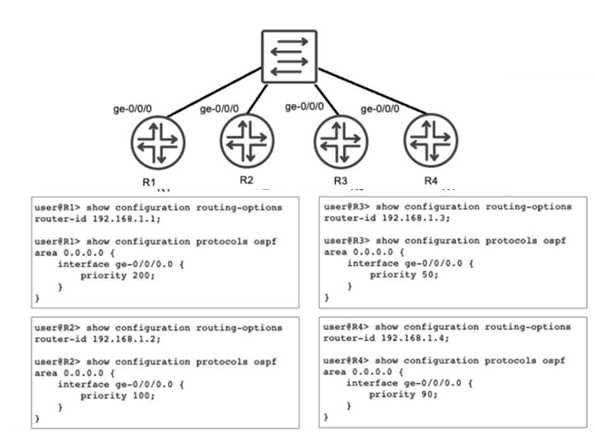
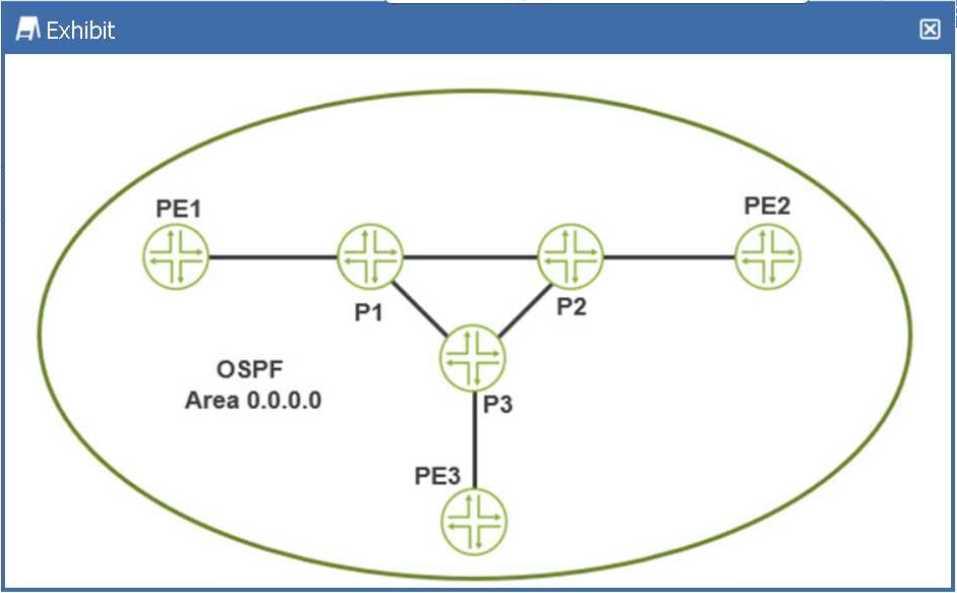
- Identify concepts such as the link-state database, OSPF packet types, router ID, adjacencies and neighbors, designated router and backup designated router, OSPF area and router types, and LSA packet types.
- Configure, monitor, or troubleshoot interfaces and neighbors, routing policy application, and use troubleshooting tools.
Common weak spots include multi-area behavior and LSA types.
Intermediate System to Intermediate System (IS-IS)
- Identify concepts including the link-state database, IS-IS PDUs, TLVs, adjacencies and neighbors, levels and areas, designated intermediate system, and metrics.
- Configure, monitor, or troubleshoot interfaces and adjacencies, routing policy application, and troubleshooting tools.
Level and area design plus TLV details frequently trip up candidates.
Border Gateway Protocol (BGP)
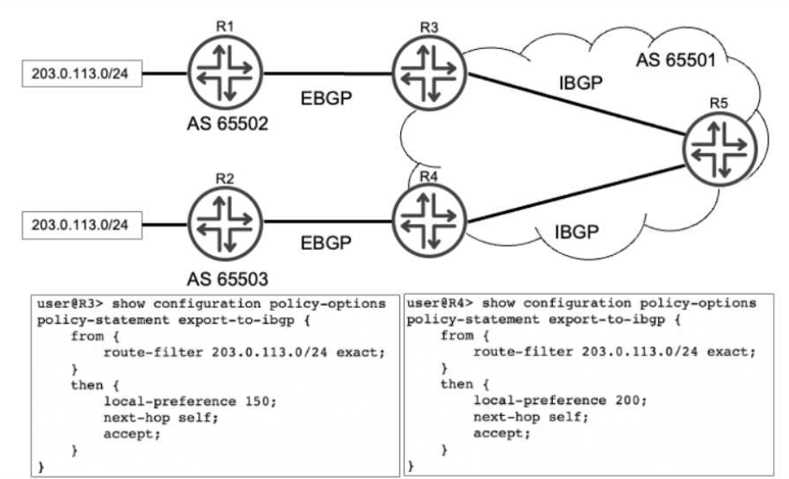
- Identify basic operation, message types, attributes, route/path selection process, and IBGP versus EBGP functionality and interaction.
- Configure, monitor, or troubleshoot groups and peers, additional basic options, and routing policy application.
Path selection and attribute manipulation are frequent challenge areas.
Layer 2 Bridging or VLANs
- Identify Layer 2 bridging concepts for Junos OS service provider switching platforms, bridging elements, frame processing, virtual switches, and provider bridging (Q-in-Q tunneling).
- Identify VLAN concepts such as port modes, tagging, and Integrated Routing and Bridging (IRB).
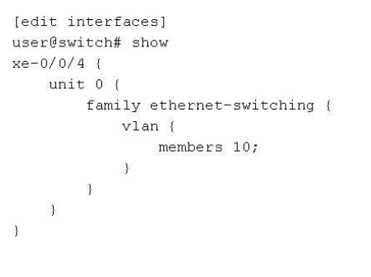
- Configure, monitor, or troubleshoot interfaces and ports, VLANs, IRB, and provider bridging.
Provider bridging and IRB configurations often need extra practice.
Spanning-Tree Protocols
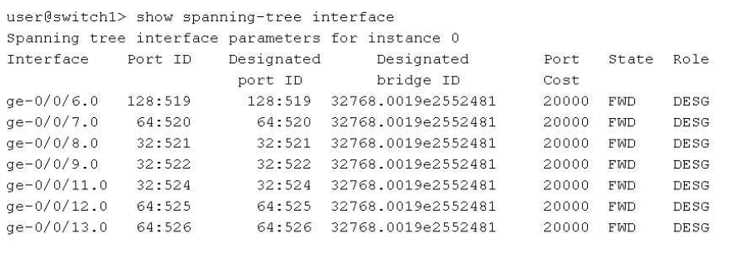
- Identify concepts, benefits, operation, or functionality of STP, RSTP, MSTP, and VSTP, including port roles and states, BPDUs, convergence, and spanning-tree security.
- Configure, monitor, or troubleshoot spanning-tree protocols and BPDU, loop, and root protection.
Security features and reconvergence behavior are common trouble spots.
Multiprotocol Label Switching (MPLS)
- Identify MPLS terminology, packet header, end-to-end packet flow and forwarding, labels and the label information base, MPLS and routing tables, RSVP, LDP, and segment routing with MPLS.
- Configure, monitor, or troubleshoot MPLS forwarding, RSVP-signaled LSPs, LDP-signaled LSPs, and shortest-path segment-routing LSPs.
Label operations and signaling protocols require solid hands-on understanding.
IPv6
- Identify concepts of static routes, dynamic routing with OSPFv3, IS-IS, and BGP, and IPv6 over IPv4 tunneling.
- Configure, monitor, or troubleshoot IPv6.
Tunneling and dual-stack scenarios can feel less familiar to some candidates.
Tunnels
- Identify concepts, requirements, or functionality of IP tunneling, including applications and considerations and GRE.
- Configure, monitor, or troubleshoot IP tunnels such as GRE.
GRE configuration and use cases are straightforward once practiced.
High Availability
- Identify concepts, benefits, applications, or requirements of link aggregation groups (LAGs), graceful restart, GRES, NSB, NSR, BFD, and VRRP.
- Configure, monitor, or troubleshoot LAGs, GR/GRES/NSB/NSR, BFD, and VRRP.
Failover behavior and nonstop features often need repeated lab practice.
For the full official list of objectives, visit the Juniper JNCIS-SP page.
Cost and Eligibility
The exam fee is $300 USD. The required prerequisite is JNCIA-Junos. Recommended training includes Junos Intermediate Routing, Junos Service Provider Switching, and Junos MPLS Fundamentals, though formal training is not mandatory.
Retake policy: after a first failure you may retake at any time. After any later failure you must wait 14 calendar days before the next attempt. Once you pass, you must wait at least 18 months before retaking the same exam (typically for recertification). Certifications remain valid for three years.
Why JN0-364 Certification Matters in 2026
Service provider networks continue to grow in scale and complexity. Carriers and large ISPs rely heavily on Juniper platforms for core routing, MPLS transport, and high-availability designs. The JNCIS-SP credential shows employers you can work effectively with these technologies at an intermediate level.
Job titles that frequently list JNCIS-SP or equivalent skills include service provider network engineer, ISP routing engineer, backbone network specialist, and NOC engineer focused on Junos environments. Salary data for 2026 places many JNCIS-level professionals in the 85,000–120,000 range in the United States, with higher figures in major metro areas and for those who also hold professional-level credentials. Specialized SP skills often command a premium over general enterprise networking roles.
Industry trends reinforce the value of this certification. Segment routing, continued MPLS deployments, IPv6 expansion, and the need for resilient high-availability designs keep demand steady. Professionals who can configure and troubleshoot these features on Junos devices remain in demand. Earning JN0-364 also opens the path to JNCIP-SP and eventually JNCIE-SP, creating a clear progression for career growth inside carrier and large-scale network teams.
For current official details on the certification track, see Juniper’s site. Independent salary and demand insights appear in industry reports and sites such as PayScale and Lightcast-derived analyses.
Proven Study Strategies for JN0-364 Success
Start with a realistic timeline of four to six weeks if you already hold JNCIA-Junos and have some Junos experience. Week 1 focuses on protocol-independent routing and OSPF. Week 2 covers IS-IS and BGP. Week 3 tackles Layer 2 bridging, VLANs, and spanning-tree protocols. Week 4 concentrates on MPLS, IPv6, tunnels, and high availability. Use the final one to two weeks for full practice tests and targeted review of weak areas.
Allocate study time according to topic depth rather than equal shares. Spend more hours on BGP, OSPF, IS-IS, and MPLS because they appear frequently and require solid configuration knowledge. Hands-on practice is essential. Build simple labs in a virtual environment with vMX or similar images. Configure OSPF areas, BGP peers, LDP and RSVP LSPs, GRE tunnels, and high-availability features, then break and fix them.
Make PassITExams practice questions and the exam simulator the core of your daily routine. Work through PDF practice questions for focused review, then run timed practice tests to build speed and stamina. After each session, read every explanation—even for questions you answered correctly. Supplement with official Juniper documentation, the recommended training courses if available, and free video walkthroughs of key show commands.
On exam day, manage time carefully. You have roughly 80 seconds per question. Flag difficult items and return to them. Read every question fully before looking at the options. Eliminate clearly wrong answers first. Trust the knowledge you built through consistent practice rather than second-guessing.
PassITExams Features That Guarantee Your Success
- Real Exam Questions
Our questions match the style, difficulty, and topics of actual JN0-364 exams. You practice with material that prepares you for what you will see on test day.
- 3 Months Free Updates
When the exam content changes, you receive automatic updates at no extra cost so your study material stays current.
- Detailed Answer Explanations
Every question includes a clear explanation of the correct answer and why the other options are wrong. You learn the reasoning, not just the choice.
- 100% Money-Back Guarantee
If you do not pass after using our materials as directed, we refund your purchase. We stand behind the quality of our preparation resources.
- Expert-Crafted Content
Certified professionals who work with Junos service provider technologies create and review every item. You benefit from practical, accurate knowledge.
- Multiple Study Formats
Choose PDF practice questions for offline study, online practice tests for timed sessions, or mobile-friendly access so you can prepare wherever you are.
- Verified Accuracy
We apply rigorous quality checks so the material maintains high accuracy and stays aligned with the current exam objectives.
- Interactive Practice Tests
The simulator recreates the look, feel, and timing of the real JN0-364 exam so you walk in already comfortable with the environment.
- Performance Tracking
See your scores by domain. Identify weak areas quickly and focus your remaining study time where it helps most.
- 24/7 Customer Support
Our team is available around the clock for technical help or study guidance whenever you need it.
Frequently Asked Questions About JN0-364
How hard is the JN0-364?
It’s intermediate level. If you already have JNCIA-Junos and some hands-on Junos experience, it’s manageable with focused study. The mix of conceptual and configuration questions keeps it challenging but fair.
How many questions are on the JN0-364 exam?
There are 65 multiple-choice questions. You get 90 minutes to finish them.
What’s the passing score for JN0-364?
Juniper scores the exam pass/fail and does not publish a numeric cutoff. Aim to score consistently above 80 percent on practice tests to feel confident.
Do I need hands-on experience before taking JN0-364?
Yes, some practical experience helps a lot. The exam tests configuration and troubleshooting skills, so lab time pays off.
How long should I study for the JN0-364?
Most candidates with a solid JNCIA foundation need four to six weeks of steady study. Adjust based on how familiar you already are with the topics.
Is the JN0-364 exam available online?
Yes. You can take it through Pearson VUE online proctoring or at a testing center.
What is the cost of the JN0-364 exam?
The standard fee is $300 USD. Prices can vary slightly by region or voucher promotions.
Can I retake the JN0-364 if I fail?
Yes. After the first failure you can retake anytime. After later failures you must wait 14 days. Once you pass, you wait at least 18 months before retaking the same exam.
Does PassITExams update the questions when the exam changes?
Yes. You receive free updates for three months so your material stays aligned with the current exam.
What formats does PassITExams offer for JN0-364?
We provide PDF practice questions, online interactive practice tests, and mobile-friendly access so you can study the way that works best for you.
Is there a money-back guarantee?
Yes. If you use our materials and do not pass, we offer a full refund under our guarantee policy.
Where can I find the official exam objectives?
The complete list is on the Juniper Networks JNCIS-SP certification page. We recommend reviewing it while you study.
Disclaimer
PassITExams practice materials are independently developed for educational and exam preparation purposes only. They are not affiliated with, endorsed by, or sponsored by Juniper Networks or HPE. All trademarks belong to their respective owners. Actual exam content may differ.

Reviews
There are no reviews yet.