



PassITExams: Your Trusted Partner for 1Z0-518 Exam Success
Passing a certification exam on your first attempt is not about luck; it is about studying the right things in the right way. That is exactly the problem PassITExams was built to solve. Our 1Z0-518 practice test gives you direct access to practice questions that reflect the real exam structure, topic coverage, and question style that Oracle uses. No vague textbook theory, no recycled questions from five years ago. Just current, accurate, exam-ready material.
What makes candidates fail the 1Z0-518 is not a lack of effort; it is a mismatch between what they study and what actually shows up on exam day. Our team tracks real exam feedback, reviews the latest Oracle syllabus updates, and rebuilds our question bank whenever the exam changes. So when you sit down on test day, the material feels familiar because it genuinely is. You have already seen the format, worked through the logic, and practiced under timed conditions. That is the PassITExams difference.
How PassITExams Gets You Ready for the 1Z0-518
Here is how we build your preparation from the ground up.
Our starting point is always the official Oracle exam syllabus. We map every topic, from navigating the R12 interface to closing an AR period, and make sure our question bank covers each area with the right depth. The 1Z0-518 practice questions we build are not just factual recall questions. They are scenario-based, just like Oracle prefers, which means you have to actually apply your knowledge to reach the right answer.
Every question in our 1Z0-518 practice test includes a full explanation. We do not just tell you which answer is correct; we walk you through why it is correct and why each wrong answer falls short. Over time, this builds genuine understanding, not just exam muscle memory. That matters because Oracle does not repeat questions verbatim, but it does repeat the same concepts in different forms.
Our online practice test platform simulates the real exam environment. Same question format, same time pressure, same interface feel. You will not be surprised by anything on test day because you have already practiced it. If you want to prep offline, our PDF format works on any device and is easy to annotate.
You can find everything you need about the official exam, including registration details, directly on the Oracle 1Z0-518 exam page.
Oracle E-Business Suite R12.1 Receivables Essentials (1Z0-518) – Full Exam Breakdown
Who Is This Exam Designed For?
The 1Z0-518 is built for intermediate-level professionals who work within the Oracle Partner Network and focus on selling or implementing Oracle EBS Financial Management modules. This is not a beginner’s exam; Oracle expects you to bring real implementation experience to the table.
Here are the professionals who benefit most from this certification:
- EBS Implementation Consultants who configure and deploy Oracle Receivables for client projects and need a credential that backs up their expertise
- Finance Systems Analysts who manage AR configurations and integrations and want recognition for that technical work
- Oracle Functional Consultants who handle the full Order to Cash workflow and are looking to expand their certified skill set
- IT Project Managers overseeing EBS Financial Management rollouts who want a deeper technical foundation
- Junior Oracle Professionals with hands-on EBS exposure who are ready to formalize their skills and move into more senior implementation roles
Earning this certification gives you the title of Oracle E-Business Suite 12 Financial Management Certified Implementation Specialist: Oracle Receivables. For OPN members, it also helps your company qualify for Oracle’s EBS Financial Management Specialization, which opens up additional business opportunities through the partner program.
Official Exam Details (Verified from Oracle’s Official Page)
The information below is confirmed directly from Oracle’s official 1Z0-518 exam page:
| Detail | Information |
| Exam Code | 1Z0-518 |
| Exam Name | Oracle E-Business Suite R12.1 Receivables Essentials |
| Format | Multiple Choice |
| Number of Questions | 64 |
| Duration | 120 minutes |
| Passing Score | 60% |
| Validation | Valid for Oracle E-Business Suite 12 and 12.1 |
| Exam Price | USD $245 (may vary by country) |
| Delivery | Online proctored (from home) or authorized testing center |
Two things stand out here. First, the exam is validated for both EBS 12 and 12.1, which means the content covers concepts applicable across both versions. Second, with 64 questions in 120 minutes, you have just under two minutes per question, enough time if you know the material, not enough time to figure things out on the spot.
If you are ready to register, you can buy the exam directly through Oracle and redeem your voucher within six months of purchase. Once you complete the exam, your score will appear on-screen immediately, and Oracle will send an email confirmation. You can also view your full score report through Oracle CertView, Oracle’s official scores and certification portal.
What the 1Z0-518 Actually Covers, Complete Syllabus Breakdown
The exam is split into two main sections: E-Business Essentials and Receivables. Both sections must be passed with a minimum score of 60%. You cannot compensate for weakness in one by excelling in the other; each is evaluated independently.
Here is a full look at every topic area, written to help you understand what Oracle actually expects you to know.
Section 1: E-Business Essentials
Navigating in R12 Oracle Applications
This is where the exam starts, and many candidates underestimate it. Oracle expects you to know how to move around the R12 interface with purpose. That means understanding how to log in, select a responsibility, and get from the Personal Home Page into specific applications. You need to know how to enter and retrieve data using Forms, run and monitor programs and reports, set up Favorites, and use the online help system correctly. You also need to know how to log out properly. These tasks sound basic, but Oracle frames them in scenario-based questions that trip up people who only have surface-level experience.
Introduction to Oracle Applications R12
Here you need to understand the big picture of what R12 EBS actually is. What products make up the EBS footprint? What are the key benefits Oracle built into R12 over earlier versions? How does the architecture work at a high level? This topic sets the foundation for everything else in the exam; understanding the platform conceptually helps you answer scenario questions across every other topic.
Shared Entities and Integration
Oracle EBS is not a collection of isolated modules; it is a tightly connected suite. This topic tests whether you understand how data and processes flow across that suite. You need to identify the key integration points between products, explain which entities are shared across the system (like customers and suppliers), and describe the major business flows, such as Order to Cash and Procure to Pay, that span multiple applications.
Fundamentals of Flexfields
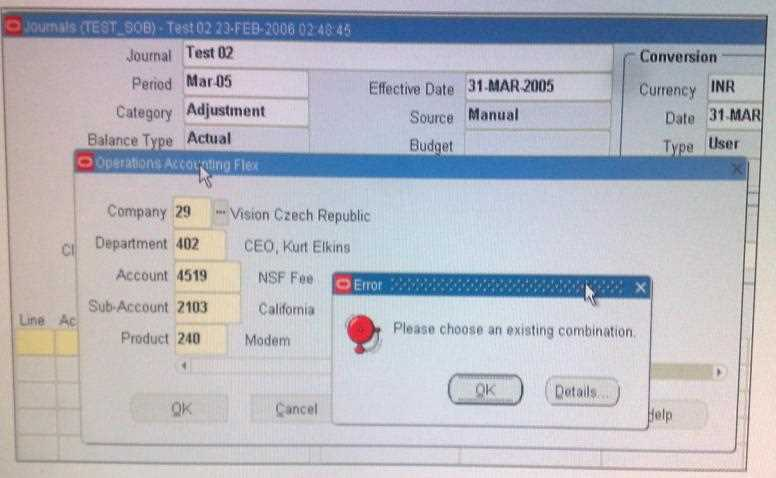
Flexfields are one of Oracle’s most important configuration tools, and this topic comes up regularly in the exam. You need to understand what Flexfields are, how they are structured, and how to implement them. That includes the difference between Key Flexfields and Descriptive Flexfields, how to create value sets and assign values, and the steps required to define and deploy a Flexfield correctly.
Fundamentals of Multi-Org
Multi-Org is a topic that catches a lot of candidates off guard because there is a lot of detail packed into it. You need to understand what Multiple Organization support means in EBS, what types of organizations the model supports, and how the structure secures data across different org units. The exam also goes into Multi-Org Access Control, how Multi-Org preferences work, and the concept of Enhanced Multiple-Organization Reporting. You will also need to understand subledger accounting at a conceptual level here.
Fundamentals of Workflow and Alerts
This is a lighter topic compared to Multi-Org, but it still deserves attention. You need to understand what Oracle Workflow is, how it operates within EBS, and what business value it provides. The exam focuses on concepts and benefits rather than deep technical configuration at this level.
Section 2: Receivables
Overview of Oracle Receivables Process
Before diving into specific features, you need to understand where Oracle Receivables sits within the broader Order to Cash lifecycle. This topic covers the overall AR process, the key stages within it, and the open interfaces Oracle provides to bring data into Receivables from external systems. Getting this right sets the context for every other Receivables topic.
Order to Cash Lifecycle Overview
This is the end-to-end view, from the moment an order is placed through to bank reconciliation. You need to explain each stage of the lifecycle, describe how EBS applications integrate throughout the process, and identify the key touchpoints where Receivables plays a role. Expect scenario questions that test your ability to trace a transaction through the full cycle.
Manage Parties and Customer Accounts
Customer management is a substantial topic in this exam. You need to know how to create and maintain party and customer account information using Oracle’s Trading Community Architecture (TCA). That includes setting up profile classes and assigning them to accounts, merging parties and accounts when needed, enabling customer account relationships, and defining TCA party paying relationships. You also need to understand how to view party information and what setup options control the behavior of customer accounts.
Implement Customer Invoicing
This topic is about setting up the invoicing process correctly before transactions start flowing. You need to understand what setup steps are required, what the major implementation considerations are for customer invoicing, and how the configuration choices you make affect how invoices behave downstream.
Process Invoices
Once setup is done, this topic covers day-to-day invoice processing. You need to know how to enter invoices, complete them, make corrections, and perform other invoice actions. Printing transactions and statements is also covered here, as is event-based management, a feature that controls when certain invoice events trigger actions in the system.
Process Invoices Using AutoInvoice
AutoInvoice is Oracle’s tool for importing invoice data from external systems in bulk, and it is a well-tested exam topic. You need to understand the full AutoInvoice process, how to run it, and, critically, how to handle errors using AutoInvoice Exception Handling. Error correction is where most real-world implementations spend time, so Oracle tests it thoroughly.
Bill Presentment Architecture (BPA)
BPA is Oracle’s framework for controlling how invoices are presented to customers. You need to understand how to register data sources, create bill templates, define rules that match templates to the right customers, and print BPA transactions. This is a more specialized topic, but it shows up on the exam, so do not skip it.
Receipts
Receipts are one of the heavier topics in the Receivables section. You need to understand the overall receipt process, how to apply receipts using different methods, and how to handle situations that arise, like creating chargebacks, processing adjustments, and managing claims. The topic also covers how to apply non-manual receipts (such as lockbox or automatic receipts) and how to use balancing segments correctly when creating receipts.
Implement Receipts
Similar to the invoicing implementation topic, this one focuses on the setup side of receipts. You need to know what setup information needs to be in place before receipts can be processed, and what implementation considerations affect how the receipts module behaves.
Credit Management
This topic covers Oracle’s credit management functionality within AR. You need to know how to set up credit management, how credit profile changes work, and how the credit management processing cycle operates. Workflow and lookups play a role here, and the exam also tests your ability to review credit management performance and apply credit hierarchy rules.
Tax Processing
Tax in Oracle Receivables runs through the E-Business Tax module. You need to understand how that module connects to Receivables, what the required setup steps are for tax within AR, and how to manage tax accounting and handle tax adjustments when they arise. This is a topic where candidates with hands-on experience have a clear advantage.
Period Closing Process
Closing an accounting period in Oracle Receivables involves more steps than most people expect, and the exam reflects that complexity. You need to describe the subledger accounting process within AR, list the actions required to close a period in the Order to Cash flow, and identify the reports that help confirm everything is in order before you close. The Create Accounting program and the Revenue Recognition program are both covered here, and you need to understand what each one does and when it runs.
Prerequisites and Recommended Training
Oracle does not set hard prerequisites for the 1Z0-518, but they do recommend completing training before attempting the exam. The recommended learning path is the E-Business Suite Financial Management learning path on Oracle MyLearn.
Additional preparation resources available, particularly for Oracle Partner Network members, include the Oracle E-Business Suite Essentials Implementation Boot Camp, the Oracle E-Business Suite R12.1 Accounts Receivable Implementation Boot Camp, and an OPN Guided Learning Path specifically designed for the Oracle EBS Financial Management Certified Implementation Specialist: Receivables credential.
If you want to get certified and sharpen your skills through a structured annual subscription, Oracle also offers an E-Business Suite Financial Management learning subscription that gives you access to role-based and topic-based digital courses updated with each product release.
Why the 1Z0-518 Certification Still Holds Real Value in 2026
Some people assume that older EBS certifications are less relevant now that Oracle has shifted attention toward Oracle Cloud. That assumption is wrong, and it could cost you career opportunities.
Thousands of organizations worldwide still run Oracle E-Business Suite as their core ERP platform. Many of them are mid-enterprise or large enterprise businesses that have invested heavily in EBS customizations and integrations. These companies need skilled professionals to maintain, upgrade, and support those systems, and they are willing to pay well for the right credentials.
Oracle EBS Functional Consultants with Receivables expertise typically earn between $85,000 and $130,000 per year in the United States, based on salary data from Glassdoor and PayScale. Senior consultants and independent contractors in this space often command higher rates, especially for implementation projects.
Beyond the salary angle, the 1Z0-518 teaches you concepts that transfer directly into Oracle Cloud environments. The Order to Cash logic, receivables processing principles, and Multi-Org frameworks you learn here apply to Oracle Fusion Financials as well. So passing this exam does not just validate your current EBS skills; it also builds a foundation for wherever Oracle technology takes you next.
For OPN members specifically, this certification is a direct pathway to achieving the Oracle EBS Financial Management Specialization, which has tangible commercial value for consulting firms and system integrators.
A Study Plan That Actually Works for the 1Z0-518
Here is a practical five-week approach that candidates with some EBS experience can follow. If you are newer to the platform, add an extra week and spend more time on the Receivables section.
- Week 1: Build your EBS foundation. Start with the E-Business Essentials topics. Navigation, Multi-Org, and Flexfields are the areas that catch people by surprise because they seem easy but are tested in tricky ways. Go through your PassITExams practice test for these topics, and for every question you get wrong, read the explanation fully before moving on.
- Week 2: Learn the Order to Cash story. Focus on the Order to Cash lifecycle and how it connects to Receivables. Draw the flow out on paper. Understand how an order becomes an invoice, how an invoice becomes a receipt, and how a receipt closes in the ledger. If you can explain that process out loud without notes, you are ready to move on.
- Week 3: Go deep on invoicing. Cover customer invoicing setup, the Process Invoices topic, and AutoInvoice thoroughly. AutoInvoice exception handling is almost always tested; know the error correction workflow inside out.
- Week 4: Tackle receipts, credit, and tax. These three topics are more specialized, but they carry real weight on the exam. Pay particular attention to the different ways you can apply receipts, and make sure you understand how E-Business Tax integrates with Receivables at a setup level.
- Week 5: Switch to full practice mode. Stop reading new material and start running timed practice tests every day using the PassITExams exam simulator. After each test, review every question you missed and trace why you got it wrong. Use your score reports to identify weak spots and focus your last few revision sessions on those specific areas.
One timing tip worth keeping in mind: 64 questions in 120 minutes gives you an average of about 1 minute and 52 seconds per question. That feels comfortable until you hit a complex scenario question that requires you to work through three or four steps mentally. Practice under time pressure from the start so the clock never becomes your enemy.
What You Get with PassITExams – Features Worth Knowing
- Real Exam Questions, Not Guesswork: Every question in our 1Z0-518 question bank is based on real exam feedback from candidates who have recently sat the test. Oracle-certified experts then review and verify each question against the current syllabus. You get content that reflects what Oracle actually tests, not what someone thinks it might test.
- 3 Months of Free Updates Included: Oracle updates its exams. When that happens, your materials update too. For three full months after your purchase, any changes to the 1Z0-518 content are pushed to your account at no extra cost.
- Clear Explanations for Every Single Answer: Getting a question right matters less than understanding why it is right. Every question in our bank comes with a full explanation of the correct answer and a breakdown of why each wrong option misses the mark. This is how you build the kind of deep understanding that handles new question formats on exam day.
- 100% Money-Back Guarantee: If you prepare with PassITExams and still do not pass, you get your money back. Full stop. We are confident enough in our content to back it with a real guarantee.
- Flexible Study Formats: Download the PDF and study offline at your own pace, or use the online test platform for timed practice sessions. Both formats are mobile-friendly so you can study from any device.
- Accurate, Verified Content: We run quality checks on every question in our bank, comparing it against official Oracle documentation. Our accuracy target is 99% or better, and we take that seriously.
- Simulated Exam Experience: The online practice test mirrors the real exam as closely as possible. Same format, same timing, same pressure. By the time you sit the real 1Z0-518, it will feel like a session you have already done before.
- Progress Tracking by Topic: After each practice session, you can see how you are performing across individual topic areas. This tells you exactly where to focus your remaining study time rather than reviewing material you already know well.
- Round-the-Clock Support: If a question does not make sense or you are struggling with a concept, our support team is available 24/7. Whether it is a technical issue with the platform or a genuine study question, you will get a real answer.
See also: Is Oracle Certification Worth It in 2026?
Questions Candidates Ask Most About the 1Z0-518
How hard is the 1Z0-518 in practice?
It is rated at intermediate level by Oracle, and that is a fair description. If you have worked hands-on with Oracle Receivables in an implementation context, most of the content will feel familiar. The trickier parts are the Multi-Org and Flexfields topics on the Essentials side, and AutoInvoice exception handling on the Receivables side. Candidates with only theoretical knowledge tend to struggle more; this exam rewards people who have actually used the system.
How many questions are there and how long do I have?
There are 64 multiple-choice questions, and you have 120 minutes to complete the exam. That is from the official Oracle exam page.
What score do I need to pass?
You need 60% in each section; E-Business Essentials and Receivables are scored separately. Both must hit that threshold independently.
Is there a training requirement before I can take the exam?
No hard requirement, but Oracle recommends completing the E-Business Suite Financial Management learning path before attempting the exam. Hands-on implementation experience is just as valuable as formal training for this one.
How often does PassITExams update the 1Z0-518 question bank?
We track Oracle exam updates and revise our content whenever changes occur. Your purchase includes free updates for three months, so you are always studying current material.
What formats do the study materials come in?
You get both a downloadable PDF and access to an online practice test platform. Both work on desktop, tablet, and mobile.
Can I pass the 1Z0-518 without the official Oracle training?
Yes. Many candidates who have practical EBS experience prepare successfully using PassITExams materials alongside Oracle’s official documentation. The training courses help, but they are not mandatory. The official Oracle documentation and the PassITExams question bank together cover the exam thoroughly.
What career paths open up after passing the 1Z0-518?
Roles like Oracle EBS Functional Consultant, AR Implementation Specialist, Finance Systems Analyst, and EBS Project Lead are the most common. For OPN member companies, this certification also contributes to achieving Oracle’s EBS Financial Management Specialization, which has business development value beyond individual career benefits.
What happens right after I finish the exam?
Your score appears on screen as soon as you submit. Oracle also sends you an email confirmation. You can view your full score report and certification record through Oracle CertView, Oracle’s official certification tracking portal.
Is the 1Z0-518 certification worth pursuing in 2026?
Yes, and for more than one reason. EBS remains widely deployed, and certified professionals are still in demand to support those implementations. On top of that, the concepts you learn for this exam- Order to Cash, Multi-Org, subledger accounting- apply directly to Oracle Cloud Financials. So this certification does double duty: it validates your current skills and builds a foundation for cloud-era Oracle work.
How do I buy and schedule the exam?
You can purchase the exam and schedule your sitting directly on the Oracle education platform. Vouchers are valid for six months from purchase, so you have time to prepare before committing to a date. You can take the exam online from home, which Oracle supports through their proctored delivery option.
How quickly can I access PassITExams materials after purchasing?
Access is immediate. Once your payment is confirmed, your PDF download and online practice test access are ready to go. No waiting period, no complicated activation.
Disclaimer:
Oracle® is a registered trademark of Oracle Corporation. All other trademarks, certification names, and logos mentioned in our products are the property of their respective owners. PassitExams.com is an independent provider of IT certification exam preparation materials and is not affiliated with, endorsed by, or sponsored by Oracle Corporation or any other certification vendor. Certification names are used solely to identify the exams our materials help candidates prepare for. We claim no ownership of any trademarks or intellectual property.
Reviews
There are no reviews yet.