



PassITExams: Your Trusted Study Partner for 1Z0-820 Certification
Let’s be honest, studying for a certification exam while juggling a full-time sysadmin role is not easy. You don’t have weeks to waste on materials that don’t reflect what Oracle actually tests. That’s the exact problem PassITExams was built to solve.
Our 1Z0-820 Practice Tests are built around the real exam, not a textbook summary of it. Every question we publish has been verified against the official Oracle exam blueprint. We’ve reviewed candidate feedback from people who recently passed the test, and we update our materials whenever Oracle makes changes. So what you’re studying is what you’ll actually see. If you’ve been relying on outdated Practice Tests from generic prep sites, this is a noticeable upgrade.
Most candidates who struggle with the 1Z0-820 don’t fail because the content is impossibly difficult; they fail because they studied the wrong things, or they ran out of time on scenario questions they weren’t prepared for. PassITExams gives you a focused, structured question bank that builds both your knowledge and your test-taking speed. By the time exam day arrives, you’ll have answered hundreds of questions that mirror the real thing, and you’ll know exactly how to approach each topic area with confidence.
How PassITExams Gets You Ready for the 1Z0-820
Our preparation approach is straightforward: we give you the best practice questions available, back them with detailed explanations, and make sure everything stays current.
Every question in our 1Z0-820 practice test is built around real exam scenarios. You won’t find questions like “define ZFS” in our database. Instead, you’ll see scenario-based questions that drop you into a real administrative situation: a storage pool needs attention, a zone won’t boot, IPS is failing to pull packages, and ask you to identify the right fix. That’s how Oracle tests you, and that’s how we prepare you. You can check the official exam overview directly on the Oracle University exam page if you want to cross-reference our topics against the official blueprint.
Before any question enters our database, it goes through expert review, peer verification, and cross-checking against actual exam feedback. The result is a question bank with 99%+ accuracy that you can trust to prepare you for the real test. Study using our Practice Tests on any device, or use our online simulator to run full timed practice tests that feel just like the actual exam environment.
Complete Exam Overview: Upgrade to Oracle Solaris 11 System Administrator (1Z0-820)
Who Is This Exam Built For?
The 1Z0-820 is an upgrade exam. Oracle designed it specifically for system administrators who are already certified at the Solaris 10 level and want to move up to the Oracle Certified Professional (OCP), Oracle Solaris 11 System Administrator (upgrade) credential. It’s not an entry-level test, and that’s actually a good thing, because it means the credential carries real weight in the job market.
The professionals who benefit most from this certification include:
- Unix and Solaris System Administrators who manage enterprise servers day to day and need to formally certify their Solaris 11 skills. If Solaris 10 is what you know and Solaris 11 is what your organization is moving toward, this exam bridges that gap on paper and in practice.
- Data Center Engineers and Infrastructure Leads working in sectors where Oracle SPARC hardware is still the backbone, banking, telecom, insurance, large-scale manufacturing, and government agencies. These organizations require certified expertise, not just experience.
- Senior Sysadmins Keeping Their Credentials Current understand that an expired or outdated certification is a liability during contract negotiations, performance reviews, or job searches. The 1Z0-820 keeps your Oracle credential current without starting from scratch.
- IT Consultants and Managed Service Providers who need certified Solaris expertise to satisfy enterprise client requirements or vendor agreements with Oracle.
If you’re already comfortable managing zones, configuring storage, handling IPS packages, and troubleshooting Solaris environments, you’re in the right place for this exam.
Exam Structure and Key Details
Here’s everything you need to know before you register. These details come directly from the official Oracle exam page:
The 1Z0-820 exam consists of 75 multiple-choice questions. You have 120 minutes to complete the test, and the passing score is 66%. The exam has been validated for Oracle Solaris OS 11.2. Passing this exam earns you the Oracle Certified Professional, Oracle Solaris 11 System Administrator (upgrade) certification. You can register and buy the exam directly through Oracle, or redeem an Oracle voucher through Pearson VUE.
Once your exam is complete, your score appears on screen immediately. Oracle also sends an email confirmation, and you can view your full score report through the Oracle CertView scores portal, where your certification records are maintained.
Official 1Z0-820 Exam Topics
Oracle does not assign specific percentage weights to the individual domains on this exam. What you see below are the nine official topic areas listed on the Oracle University exam page; these are the exact subject categories your questions will be drawn from. Understanding all nine areas equally is important, and hands-on familiarity with each one is what separates candidates who pass from those who don’t.
Introducing Oracle Solaris 11 New Features and Enhancements
This is where the exam sets the foundation. You’ll need to understand what actually changed when Oracle moved from Solaris 10 to Solaris 11, not just at a surface level, but in terms of architecture, administration tools, and core system behavior. Key areas include the shift to IPS for software management, the new default security posture, changes to the network stack, and the introduction of Automated Installer.
Candidates who already know Solaris 10 well often underestimate this section and skip it. Don’t; the differences between the two versions show up throughout every other topic area, and many scenario questions hinge on knowing exactly what changed and why.
Installing the Oracle Solaris 11 Operating System
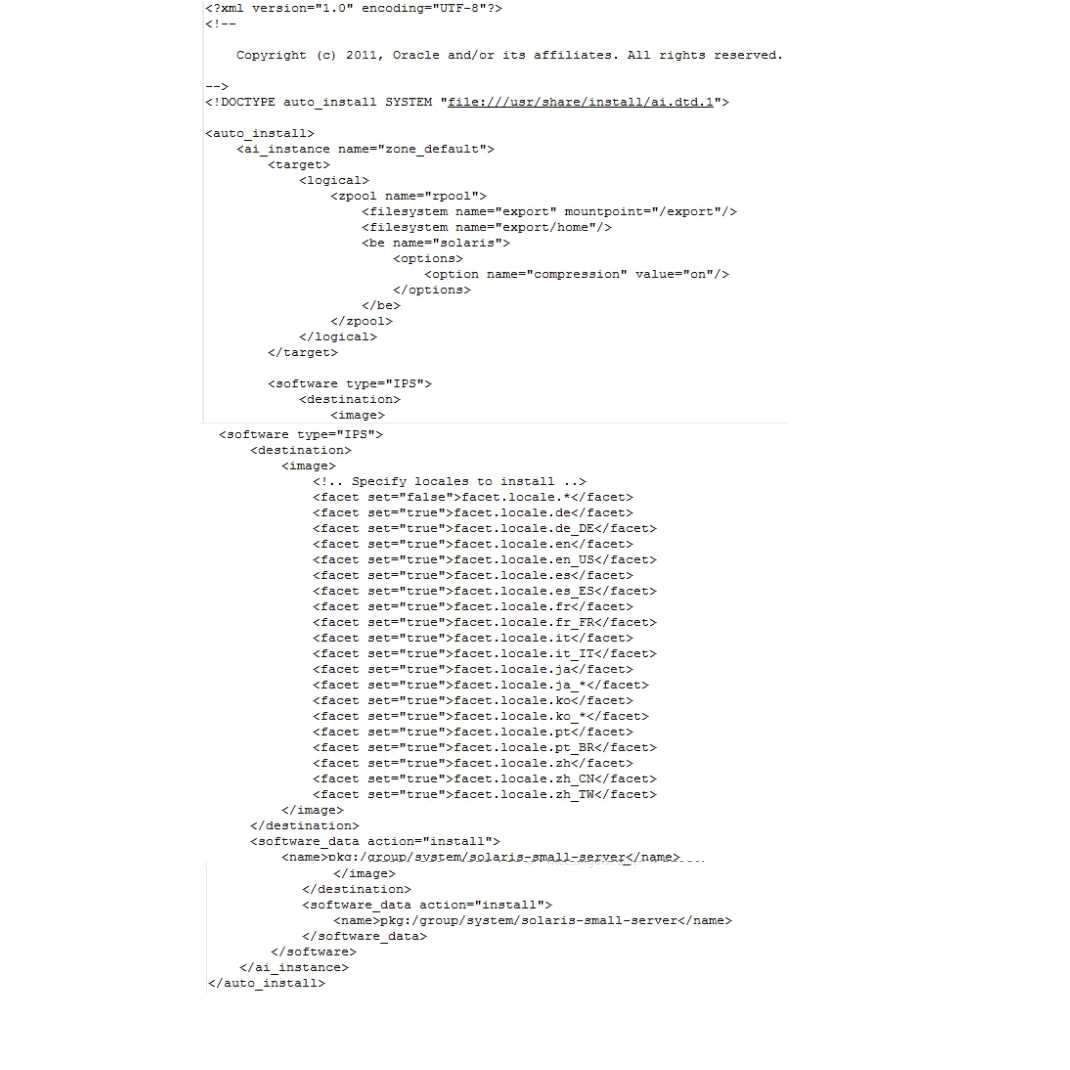
Installation is one of the heaviest tested areas on the 1Z0-820. Oracle Solaris 11 introduced Automated Installer (AI) as the replacement for JumpStart, and you’ll need to know how to work with both, and how to convert JumpStart configurations to AI format. There’s a critical point here that catches a lot of Solaris 10 admins off guard: there is no direct upgrade path from Solaris 10 to Solaris 11. You can’t run an upgrade script and carry everything over. Instead, you’re looking at a fresh installation, with migration strategies for data and workloads.
Managing Software Packages in Oracle Solaris 11
The Image Packaging System, or IPS, replaced the old SVR4 package format that Solaris 10 admins used for years. IPS works completely differently; it’s network-aware, dependency-resolving, and built around the concept of publishers and repositories.
On the exam, you’ll need to know how to configure client systems to pull packages from an IPS repository, how to set up and manage a local repository, and how to install, update, and remove software using IPS tools. The pkg command is the primary tool here, and understanding how it interacts with boot environments is important for this section and for ZFS topics as well. Candidates coming from Solaris 10 sometimes find IPS conceptually different enough that it needs dedicated study time; give it that time.
Oracle Solaris 11 Network Administration Enhancements
Solaris 11 replaced the traditional ifconfig-based network management approach with a new administrative model built around dladm and ipadm. If you’ve spent years using ifconfig, /etc/hostname, and related files to manage network interfaces in Solaris 10, this section will require some adjustment.
The exam tests your ability to configure and manage network interfaces using the new tools, as well as monitor network activity with updated Solaris 11 utilities. You’ll need to understand how network configuration is now persistent across reboots, how to create virtual network interfaces, and how the new model handles link aggregation, VLANs, and address assignment differently from what Solaris 10 admins are used to.
Oracle Solaris 11 ZFS Enhancements
ZFS existed in Solaris 10, but Solaris 11 deepened it significantly. In Solaris 11, ZFS is the only supported root file system, and boot environments are built on top of ZFS datasets. For the exam, you need to know what ZFS features and capabilities were added or changed between Solaris 10 and 11, not just how ZFS works in general.
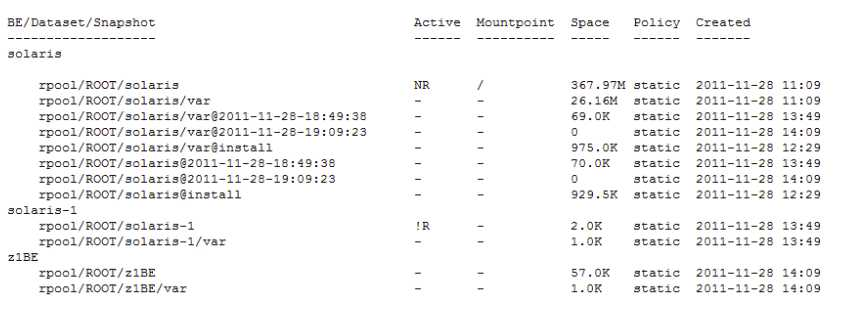
Key topics include ZFS pool and dataset management, snapshot creation and rollback, the relationship between ZFS and boot environments, ZFS cloning, and the zfs diff command for tracking file-level changes between snapshots. Scenario questions in this area often involve diagnosing storage issues, choosing the right ZFS action for a given situation, or understanding how boot environment operations interact with the file system.
Administering Oracle Solaris 11 Zones
Zones got meaningful updates in Solaris 11, and the exam expects you to know what changed. Beyond understanding how to create and manage zones using the updated tools and workflows, you’ll need to know how to migrate a physical Solaris 10 system into a Solaris 10 branded zone running on a Solaris 11 host, a process commonly called physical-to-virtual (P2V) migration.
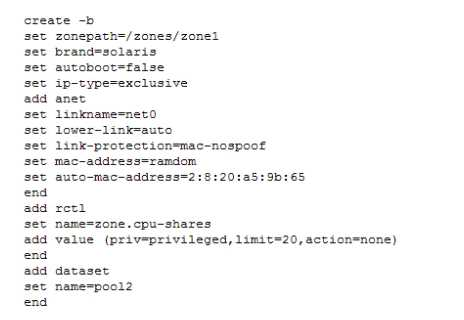
This is a practical skill that many organizations use when consolidating legacy Solaris 10 workloads onto newer hardware running Solaris 11. The exam also covers zone configuration with zonecfg, zone installation and verification with zoneadm, and the differences in zone behavior between Solaris 10 and 11.
Oracle Solaris 11 Security Enhancements
Security in Solaris 11 is significantly tighter than in Solaris 10 by default, and the exam tests your knowledge of those changes in detail. Out of the box, Solaris 11 ships with many services disabled that were on by default in Solaris 10. The root account is now a role rather than a regular user account in many configurations. The exam covers the Oracle Solaris cryptographic framework, role-based access control (RBAC) changes, audit policy configuration, and how to manage user rights and privileges in the updated security model.
You’ll also need to understand how Solaris 11’s default security posture differs from what Solaris 10 admins are used to, and what steps are required to configure access and services properly in the new environment.
Services and Processes
The Service Management Facility (SMF) is how Solaris 11 manages system services, and it was present in Solaris 10 as well, but Solaris 11 leans on it even more heavily. The exam covers how to use svcs, svcadm, and svccfg to manage, monitor, enable, disable, and troubleshoot services. You’ll also need to understand process management, how to monitor running processes, identify resource usage by process, and work with Solaris process tools.
Questions in this area often present a scenario where a service isn’t starting as expected and ask you to identify the right diagnostic or corrective steps using SMF tools.
Monitoring and Troubleshooting
The final topic area brings together many of the practical skills tested throughout the exam. You’ll need to know how to monitor system health, CPU usage, memory consumption, disk I/O, and network throughput using Solaris 11 tools. This includes utilities like dtrace, prstat, iostat, netstat, and the newer network monitoring tools introduced in Solaris 11.
Troubleshooting questions on this exam are often scenario-based: a system is behaving unexpectedly, a service won’t start, a zone is consuming too many resources, or a network interface isn’t responding, and you need to identify the right tool and approach to diagnose and fix the issue. This is where your hands-on experience pays off the most.
Exam Cost, Training, and Registration
The 1Z0-820 exam costs $245 USD. You can purchase and schedule it directly on the Oracle exam registration page, where you can also use a pre-purchased Oracle voucher. Vouchers must be redeemed within six months of purchase.
For recommended preparation, Oracle points candidates to the Transition to Oracle Solaris 11 course, which is available as part of the Oracle IT Infrastructure Learning Subscription, a subscription-based access model that includes role-based digital courses updated with each product release. The training is optional, but Oracle is clear that the best preparation combines formal training with genuine hands-on lab experience. You can explore the full Oracle certification catalog to see how the 1Z0-820 fits into the broader Oracle Solaris certification path and what other credentials are available.
After you pass, your results are visible immediately on-screen and also sent by email. Your full score report and official certification record are accessible through the Oracle CertView portal, which is Oracle’s official platform for managing and verifying certification credentials.
Why the 1Z0-820 Certification Still Matters in 2026
Oracle Solaris isn’t the most talked-about technology in IT circles these days, but it’s still quietly running critical infrastructure in sectors where reliability and security requirements are extremely high. Large financial institutions, telecommunications companies, government agencies, and healthcare organizations often run Solaris on Oracle SPARC hardware precisely because it’s stable, well-supported, and deeply integrated with Oracle’s enterprise software stack. Those environments aren’t going to migrate to Linux overnight, and they need certified professionals to keep things running.
That’s the real value of the OCP Oracle Solaris 11 System Administrator (upgrade) credential in the current job market. There are far fewer certified Solaris professionals working today than there were a decade ago, which means those who hold current credentials are in genuinely short supply. When a Solaris-heavy organization is hiring, an up-to-date Oracle certification doesn’t just help; it often decides the outcome. Salary data from sources like PayScale and Glassdoor consistently puts certified Solaris administrators in the $95,000 to $135,000+ range annually, with senior roles in financial services and enterprise IT pushing well above that.
Beyond career positioning, the certification builds real skills. Preparing for the 1Z0-820 forces you to learn IPS packaging properly, get comfortable with the new network management tools, understand how ZFS integrates with boot environments, and work through the security changes that Solaris 11 introduced. That knowledge makes you more effective at your actual job, not just more credentialed on paper.
See Also: Is Oracle Certification Worth It in 2026?
A Study Plan That Actually Works for 1Z0-820
Six weeks is a realistic timeline for most candidates with active Solaris experience. Here’s how to use that time well.
- Weeks One and Two, Get the Lay of the Land
Start by going through the official exam topics on the Oracle exam prep page so you know exactly what you’re dealing with. Then set up a Solaris 11 test environment; Oracle VM VirtualBox works fine for this, and you can run a full Solaris 11 instance on most modern hardware. Begin with the installation topics, because the JumpStart-to-AI transition is heavily tested and the conceptual differences from Solaris 10 can take time to sink in. Do at least two or three full installations using different methods before you move on.
- Weeks Three and Four, Go Deep on the Technical Topics
IPS package management, ZFS, and zones are the technical core of this exam. Don’t just read about them, practice the commands. Run pkg install, pkg update, zpool create, zfs snapshot, zonecfg, and zoneadm until the syntax feels automatic. Work through ZFS snapshot scenarios. Set up a zone from scratch. Configure a local IPS repository. The scenario questions on this exam are built around practical tasks, and you can’t fake your way through them without hands-on time.
- Week Five, Security, Services, and Networking
This week, work through the Solaris 11 security changes, the cryptographic framework, SMF service management, and the new network administration model. Focus on how each of these areas differs from Solaris 10; those differences are exactly what the exam is designed to test. Practice using svcadm, svccfg, ipadm, and dladm until you’re comfortable with each tool.
- Week Six, Practice Tests and Targeted Review
This is where PassITExams materials do the most work. Run full timed practice tests and treat them like the real exam, no stopping to look things up mid-question. After each test, review every wrong answer with the explanation in front of you. Identify your two or three weakest topic areas and spend the last few days drilling those specifically. Don’t try to re-study everything; focus where you actually need the work.
On exam day, read each question fully before looking at the answer choices; scenario questions often embed key information mid-paragraph. For questions with multiple correct answers, eliminate the clearly wrong options first. You have about 96 seconds per question, which is comfortable if you’re prepared, but tight if you’re unsure on many items.
What Makes PassITExams the Right Choice for 1Z0-820 Prep
- Real Questions, Not Guesswork: Every question in our database maps to an actual exam objective and reflects the style and difficulty of what Oracle tests. We don’t pad our question bank with filler content; if it’s in our database, it’s there because it’s relevant and accurate.
- 3 Months of Free Updates Included: Oracle updates its exams, and our question bank updates with them. Your purchase includes three months of automatic updates at no extra cost, so you’re always preparing with current materials.
- Full Explanations for Every Answer: We explain why the right answer is right and why the wrong ones are wrong. This is how you build actual understanding instead of just memorizing answer patterns.
- 100% Money-Back Guarantee: If you study with our materials and still don’t pass the 1Z0-820, we’ll refund you completely. No complicated claims process, just contact our team with your result.
- Written and Reviewed by Oracle Professionals: Our content team includes Oracle-certified Solaris administrators with real enterprise experience. Every question is peer-reviewed before it goes live in our system.
- PDF and Online Formats Available: Study from the PDF on your laptop, tablet, or phone, or log in to our online practice platform for full timed tests with performance tracking. Both options are included with your purchase.
- Verified 99%+ Accuracy: Every question goes through multiple rounds of review before entering our database. Candidate feedback keeps us sharp between review cycles.
- Simulated Exam Environment: Our online practice tests replicate the actual 1Z0-820 format: 75 questions, 120-minute timer, same question types, so you’re not encountering anything unfamiliar on test day.
- Progress Tracking by Topic: Our platform tracks how you’re performing across each of the nine exam topic areas. You’ll see at a glance where you’re solid and where you need more work.
- Support Available Around the Clock: Questions about a specific topic or need help accessing your materials? Our support team is available 24/7 to help you through your preparation.
Frequently Asked Questions About the 1Z0-820 Exam
Is the 1Z0-820 exam hard?
It’s a moderate exam for someone with solid Solaris 10 experience. The harder parts are the installation section, especially understanding the AI framework and the lack of a direct upgrade path from Solaris 10, and the IPS package management system, which works completely differently from what Solaris 10 admins are used to. Candidates who put in 4–6 weeks of real preparation, including hands-on lab time, generally find it very manageable.
How many questions are on the 1Z0-820?
The exam has 75 questions and a 120-minute time limit. You need to score 66% or higher to pass, which means getting at least 50 questions correct.
What types of questions will I see?
The format is multiple choice. Some questions have a single correct answer; others ask you to select two or more correct options. A significant portion of the exam uses scenario-based questions; you’re given a real-world administrative situation and asked to choose the correct action or identify the right tool.
Do I need Solaris 10 certification to take this exam?
Oracle designed the 1Z0-820 as an upgrade path for existing Solaris 10 certified administrators. That context is assumed throughout the exam. There’s no technical gate at registration that blocks you without a prior cert, but if you don’t have that foundation, the exam will be significantly harder.
How long should I study?
Most candidates with active Solaris experience are well-prepared after 4–6 weeks of structured study. If you haven’t worked in a Solaris environment recently, budget 6–8 weeks and prioritize hands-on lab time alongside the practice questions.
What formats do PassITExams materials come in?
We offer a downloadable PDF and an online practice test platform. Both are included with your purchase and work across desktop, tablet, and mobile devices.
How often are your 1Z0-820 questions updated?
We update our database whenever Oracle makes changes to the exam. Your purchase also includes three months of free updates, so you’ll automatically receive any new or revised questions during that period.
What’s your refund policy?
If you prepare with our materials and fail the 1Z0-820, contact our support team with your exam result, and we’ll process a full refund. No hassle.
What career roles does this certification support?
The OCP Solaris 11 System Administrator (upgrade) credential is valued in roles such as Unix System Administrator, Infrastructure Engineer, Data Center Operations Engineer, and IT Systems Consultant. It carries particular weight in industries that depend on Oracle SPARC infrastructure, financial services, telecom, healthcare systems, and government IT.
How much does the 1Z0-820 cost?
The exam costs $245 USD. You can register and purchase directly through Oracle, or use a pre-purchased voucher redeemable within six months. Scheduling is handled through Pearson VUE.
Can I take the exam from home?
Yes. Oracle offers online proctored testing through Pearson VUE, allowing you to take the exam from home. You’ll need a reliable internet connection, a webcam, and a quiet, private room that meets Pearson VUE’s environment requirements.
What’s the difference between 1Z0-820 and 1Z0-821?
The 1Z0-821 is the Oracle Solaris 11 System Administration exam; it’s aimed at admins who want the OCA credential and don’t necessarily have an existing Solaris certification. The 1Z0-820 is specifically the upgrade path for candidates who already hold Solaris 10 certification and want to achieve the OCP (Certified Professional) level. The 1Z0-820 focuses more heavily on what’s new and different in Solaris 11, while the 1Z0-821 covers Solaris 11 administration from the ground up.
Reviews
There are no reviews yet.